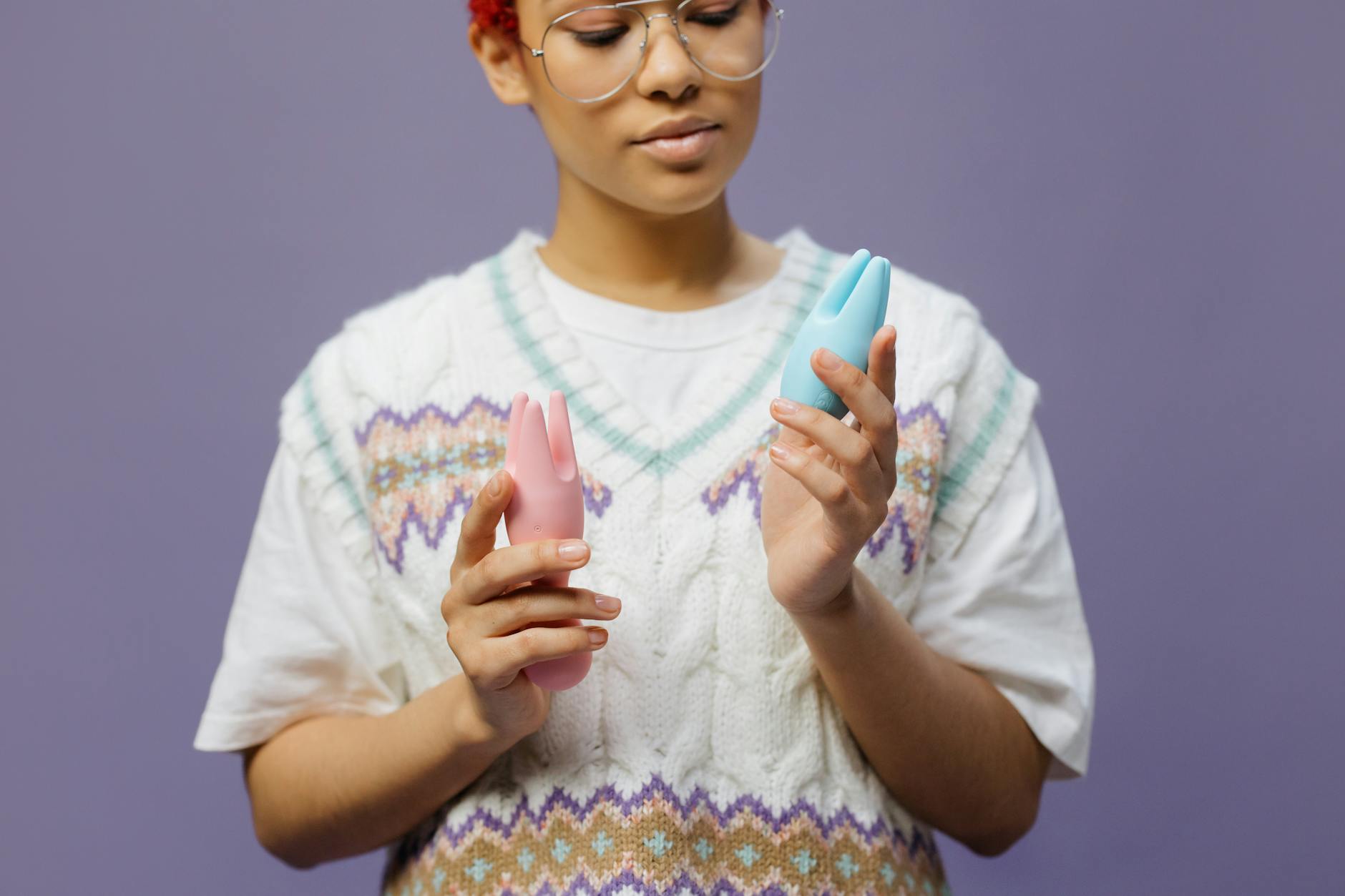
Here's the thing about hormonal shifts and sensation
Your clitoris hasn't lost its nerve endings. Your hormones have changed the environment those nerves live in. That's a completely different problem, and it actually has a solution.
When hormones shift—whether from contraceptive changes, thyroid adjustments, perimenopause, or medication—the tissue around your clitoris thins slightly. The hood becomes less vascular. Blood flow changes. Sensitivity doesn't disappear, but the way sensation travels to your brain reorganizes. Traditional vibrators with flat-out buzzing often feel harsh against tissue that's become more delicate. A lemon vibrator's air-suction technology works differently enough that it often feels more pleasurable, more controllable, and more attuned to what your body needs right now.
This is not a psychological thing. This is tissue biology meeting engineering.
Why buzz feels different when hormones shift
A traditional vibrator sends direct mechanical stimulation through layers of tissue. When your clitoris is well-vascularized and the surrounding tissue is thick, that vibration disperses evenly. It feels textured, rhythmic, sometimes almost like a massage.
When the tissue thins—which happens with drops in estrogen, shifts in testosterone, or changes in blood flow—that same buzzing intensity concentrates. It can feel overwhelming, sharp, or even slightly numbing instead of pleasurable. The vibration has nowhere to disperse, so it lands harder on a more sensitive surface.
Worse, traditional buzz can numb the area quickly. You're chasing sensation instead of building it. That's not a sign your body is broken. It's a sign you need a different tool.
How air-suction technology adapts to hormonal sensitivity
Lemon vibrators use pulsing suction rather than direct mechanical vibration. The technology creates a sealed chamber over the clitoris, then releases and re-seals in rapid pulses. This approach does three things your hormones appreciate.
First, it stimulates without direct contact pressure. The suction works through a tiny seal, so the clitoris itself isn't being buzzed. Instead, nerves are triggered through changes in pressure and the sensation of gentle pulling. That matters hugely when tissue is delicate. You're getting intense stimulation without the mechanical harshness.
Second, the seal adapts to your body. Air-suction devices work best when they fit your anatomy snugly, which naturally prevents overstimulation. The mechanism creates a boundary. Your body controls how much sensation enters the system. With buzzing, there's no such boundary. You're either in contact or you're not.
Third, suction builds sensation differently. Traditional vibration often feels strongest in the first minute or two, then plateaus. Suction tends to build more gradually, which works better for bodies that need longer arousal time. When hormones shift, that slower build often matches your actual physiological response better.
What changes when you switch from buzz to suction
Most people notice one or both of these shifts within the first few sessions.
A longer warm-up window actually feels better. If you've been frustrated by needing 20-30 minutes instead of 5, suction often makes those 20-30 minutes productive instead of tedious. The sensation builds gradually, which feels natural instead of forced.
Lower settings become genuinely pleasurable. With buzz, you often skip straight to higher intensities. With suction, pattern 1 or 2 on a lemon clitoral vibrator sometimes creates more satisfying sensation than pattern 5 on a traditional vibrator. That matters if you're dealing with oversensitivity or numbing. You have more usable range.
Sensation feels less numb after a few minutes. This is one of the most common reports. People who switched from traditional vibrators because they were going numb find that air suction maintains sensation throughout a session. You're not chasing stronger and stronger settings just to feel something.
The specific hormonal shifts where suction helps most
I've worked with couples navigating hormonal changes for decades, and there are a few scenarios where switching to a lemon vibrator makes an immediately noticeable difference.
Birth control changes. When you switch contraceptive methods or stop hormonal birth control entirely, your clitoris is often the first place you feel the shift. The tissue becomes either more or less sensitive depending on which direction your hormones move. Suction is gentler with increased sensitivity and more effective with decreased sensation.
Thyroid adjustments. Thyroid hormone affects blood flow and tissue metabolism throughout your body. When your thyroid medication changes, clitoral sensitivity often shifts weeks before anything else feels different. Air suction is forgiving during that adjustment period.
Perimenopause and menopause. As your body navigates tissue changes after menopause, the clitoris responds better to pressure changes than direct vibration. This is the population where lemon vibrators often create the most dramatic positive shift in pleasure.
Medication-related shifts. Antidepressants, blood pressure meds, and antihistamines all affect circulation and sensation in different ways. If your pleasure changed when your prescription changed, air suction often reintroduces sensation faster than switching back to traditional toys.
Building back sensation without overtrying
When hormones shift and sensation becomes tricky, the instinct is to compensate with more intense stimulation. That usually backfires. Your nervous system goes into overdrive and then stops responding.
Instead, dial back. Use the lowest setting on your lemon vibrator. Spend actual time warming up. Let arousal build naturally instead of forcing intensity. This sounds slower, but it often gets you to orgasm faster because you're working with your body's actual neurology instead than against it.
If you find yourself numb after a few minutes, stop. Rest for a week. You're not broken. Your nervous system is just recalibrating. When you restart, the sensitivity often comes roaring back.
One practical hack: Use your lemon vibrator every other day instead of daily during hormonal transition periods. This prevents adaptation and keeps sensation fresher.
When hormonal sensitivity is actually an injury signal
There's a difference between "sensitivity feels different during hormonal shifts" and "this hurts."
If you're experiencing sharp pain, burning, or discomfort that doesn't resolve with lower settings or shorter sessions, that's worth mentioning to your doctor. Hormonal changes can sometimes trigger or unmask genitourinary syndrome or other tissue conditions that benefit from specific treatment. Pain is data. Listen to it.
Otherwise, sensitivity shifts are normal. They're often temporary. And switching to a tool like a lemon vibrator that's designed for sensitive tissue usually makes the transition feel less frustrating.
People also ask
Why does my clitoris feel more sensitive when I'm on certain birth control?
Birth control changes hormonal ratios, which affects blood flow and tissue thickness around your clitoris. Some formulations increase sensitivity, others decrease it. The shift is usually temporary as your body adjusts over 2-3 months. If it doesn't improve, your doctor can suggest different formulations. In the meantime, a gentler tool like a lemon clitoral vibrator helps you stay engaged with your pleasure without frustration.
Can air-suction vibrators help if my sensitivity has completely flatlined?
Sometimes. If your sensitivity flatlined after a medication change or hormonal shift, air suction is worth trying because it works through a different mechanism than buzz. You might find sensation you didn't know was still there. But flat-lining can also signal that your specific hormone level needs adjustment. A conversation with your doctor about your actual hormone levels is worth having before you assume you need a different toy.
How long does it take to feel normal sensitivity again after hormonal changes?
It depends on what changed and how dramatic the shift was. Contraceptive switches often stabilize in 3 months. Thyroid adjustments can take 6-8 weeks to feel fully settled. Perimenopause is gradual and unpredictable. But in almost every case, giving your body time while using tools adapted to your current reality makes the transition feel less distressing. Your sensitivity will likely change again, so flexibility matters more than perfection.
Does using a lemon vibrator too much during hormonal transition cause more numbness?
Daily use during active hormonal shifts can sometimes accelerate adaptation, meaning you become desensitized faster. Every other day or even twice weekly during transition periods usually preserves sensation better. Once your hormones stabilize, your typical use pattern will likely feel fine again.
Why does traditional buzzing feel harsh after hormonal changes but was fine before?
Tissue thickness and vascularization change with hormones. When tissue is thinner or blood flow is lower, vibration concentrates instead of dispersing. The same intensity feels harsh on delicate tissue that would have absorbed it smoothly before. It's not you becoming more sensitive in the psychological sense. It's your actual tissue responding differently to the same stimulus.
Can I use a lemon vibrator if my clitoris feels tender from hormonal sensitivity?
Yes, if you start with low settings and let sensation build gradually. The gentleness of air-suction technology is actually why it's often recommended for tender clitorises during hormonal transitions. Skip patterns that feel too intense. Stay at setting 1 or 2. Take breaks if anything stings. Most people find that low-setting suction feels soothing rather than aggravating when hormones have made tissue sensitive.
Here's what actually changes
Your clitoris is still there. Your nerve endings are still there. Hormones changed how sensation travels, but they didn't change your capacity for pleasure. That matters.
When you understand what's actually happening—tissue thickness decreased, blood flow patterns shifted, your nervous system is recalibrating—you can work with it instead of fighting it. A lemon vibrator's air-suction design works with hormonal sensitivity instead of against it. You might find that switching to suction technology during a hormonal transition period gets you back to pleasure faster than trying to white-knuckle through with tools that don't fit your current reality.
Your pleasure adapts. So should your tools.