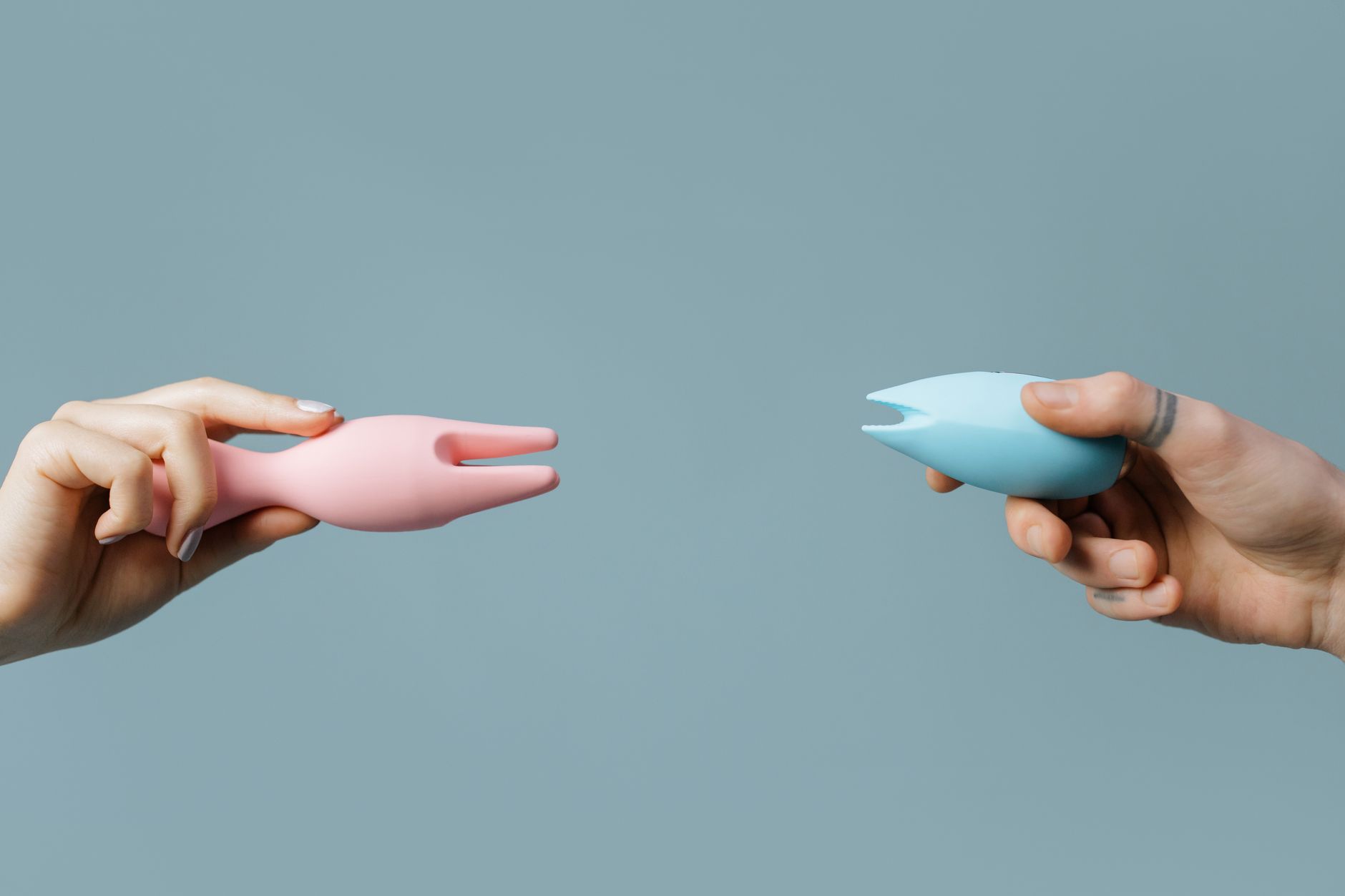
How to Use a Lemon Vibrator With a Partner Who's New to Toys
Let's be real. Bringing a vibrator into partnered sex when your partner has never used one before can feel like stepping into unknown territory. There's the worry that they'll feel threatened, replaced, or like you're implying something's wrong with them. There's also the logistics question: when do you even mention it? And then the actual mechanics of introducing it without making it weird.
Here's what I see in my practice: the couples who navigate this smoothly aren't the ones who wait for the perfect moment. They're the ones who separate the conversation from the action, give each other permission to feel hesitant, and then just experiment without expectation. Let me walk you through how.
The conversation is separate from the act
Most people make this harder than it needs to be by trying to introduce the vibrator and explain why you want it and handle their potential reaction all in one go. That's too much emotional weight for one moment.
Instead, have a regular conversation first. Not in the bedroom. Not right before sex. Sit down over coffee or during a walk and say something like: "I've been thinking about trying a vibrator together. I'm curious what you think about that." Notice what you're doing here. You're not asking permission. You're not apologizing. You're presenting an idea and opening the door for them to respond without pressure.
Then listen. If they seem interested, great. If they seem uncertain or uncomfortable, ask why. Most of the time, the hesitation isn't about the vibrator itself. It's about what they think it means about them, about you, about the relationship. That's a different conversation than the one about the toy.
What often comes up
You might hear: "Does that mean I'm not enough?" This is the performance anxiety piece. The best response isn't to reassure them that they are enough. That feels defensive. Instead, you might say: "I want more sensation in my body during sex. That's something I discovered about myself. It's not a reflection on you." Separate the pleasure from the performance.
You might also hear: "I don't know if I'm comfortable with that." Honor that. Don't push. But do ask what would make it feel more comfortable. Is it the unknown part? The feeling of being replaced? The idea of losing intimacy? Each concern needs its own answer.
Timing is about consent and comfort, not seduction
Don't introduce a lemon vibrator for the first time when you're already in the middle of sex and things are heating up. In that moment, your partner is processing sensation, responding to you, managing their own arousal. Adding a new element without a clear setup feels like a surprise, and not the good kind.
Instead, introduce it when you're both clothed, both calm, and both have the mental space to explore. Some couples do this on a Sunday afternoon when there's no pressure to perform. You literally just hold it, let them hold it, talk about it. No expectation of sex happening. Just curiosity.
Once you've both seen the thing, held it, know what it feels like to turn it on, the actual first use in partnered sex is less scary. You can say: "Remember that thing we talked about? I'd like to try it tonight if you're up for it." Now they know what's coming.
The first time you actually use it together
Start with foreplay. Don't jump straight to the vibrator. Build arousal the way you normally do. Let them touch you, let you touch them, create the baseline of intimacy and comfort.
Then introduce the lemon vibrator as part of foreplay, not as a replacement for their touch. This is important. Use it while they're still engaging with you. Maybe they're inside you and you want to add clitoral stimulation. Maybe you're being stimulated by them and you want to deepen the sensation. The vibrator becomes something that enhances what's already happening, not something that takes over.
Start on the lowest setting. This isn't about intensity right now. It's about your partner seeing that it's not aggressive, not loud, not intimidating. They can also feel the vibration against their hand or their body if they touch where you're using it. That demystifies it. Suddenly it's not a mysterious device. It's just a tool that creates a specific sensation.
What to narrate during this
Talk as you go. Not performance talk. Just real stuff. "That's nice," or "A bit lower," or "I like this." Your partner gets to hear that you're enjoying yourself. They also get concrete feedback about what's working, which moves them from feeling replaced into feeling helpful. That's a huge shift.
If they want to be involved in holding the vibrator or positioning it, let them. If they prefer to just watch and touch you while you use it, that's fine too. Different partners will have different comfort levels here. Let them lead their own participation.
Managing the internal narrative (theirs and yours)
I work with couples where one partner is absolutely fine with the vibrator and the other is quietly panicking. The panic usually shows up as shutdown, withdrawal, or sudden lack of interest in sex at all.
If you notice your partner pulling back, pause. Not in a "what's wrong" way that puts them on the spot. Just say something like: "This feels different for you. We can stop whenever you want." That takes the pressure off. Sometimes the best thing you can do is move back to what feels familiar to them.
Repeat the introduction. Different positions, different settings, different framing. Some partners warm up to things gradually. That's not resistance. That's just their nervous system adjusting.
On your end, watch for your own attachment to the outcome. If you're using the vibrator while silently thinking, "I hope this makes them comfortable with this," they're probably picking up on that energy. Relax into genuine curiosity instead. "I wonder what this feels like for them" is different from "I need them to be okay with this."
Lemon vibrators specifically feel less intimidating
If you're choosing between different clitoral vibrators for a partner who's new to toys, the design of a lemon vibrator matters. It doesn't look clinical. It looks more like a small object than a "toy." That can lower the psychological barrier for partners who feel weird about vibrators in general.
The sensation is also gentle compared to more aggressive wand vibrators. When arousal takes longer to build, a softer first experience means your partner isn't overwhelmed by intensity. You can gradually explore different patterns and settings together without either of you feeling like you've jumped straight to maximum sensation.
The suction-based technology also feels different from buzzing or pulsing. Some partners who are hesitant about vibrators specifically are less concerned about suction-based devices. It's worth exploring what aspect of vibrators they're actually uncomfortable with.
Keep talking after the first time
Don't let the experience end and then go back to business as usual. The next morning or later that day, check in. "How did that feel?" Keep it simple. Maybe they loved it. Maybe they felt weird about it. Maybe it was neutral. All of those are data points.
If they want to do it again, great. If they want to try something different, listen. If they want to take a break, honor that. This isn't a one-shot introduction. This is the beginning of both of you exploring what feels good in your shared sexuality. That takes multiple conversations and experiments.
You might also discover that they want to use it on you in a way you didn't expect, or that they want to introduce their own ideas about how to integrate it. Let their comfort and curiosity lead. The goal isn't to get them to be okay with your vibrator. It's to create space for both of you to discover what feels good together.
When to bring in a second vibrator
Some couples find that having two vibrators changes the dynamic. If your partner is feeling replaced, introducing a vibrator for them can reframe the experience. Suddenly it's not about one person being enhanced. It's about both of you exploring sensation together. How to use a lemon vibrator during partner foreplay without that awkward timing question becomes easier when you're both holding toys.
That said, not every partner will want their own vibrator. Some will prefer to stay with manual stimulation. Some will enjoy exploring the sensation of your vibrator against their body without owning one themselves. There's no "should" here. Let each person decide what feels right for them.
Red flags and what they actually mean
If your partner consistently refuses, becomes withdrawn, or shows signs of distress when you bring up vibrators, that's worth paying attention to. But the vibrator probably isn't the actual issue. There might be underlying shame around sexuality, anxiety about intimacy, or deeper relationship concerns that need a different kind of conversation.
That's where talking to someone trained in relationship dynamics can help. A therapist or coach can help you both understand what's actually driving the resistance so you can address it without the vibrator becoming a symbol of a larger tension.
Most of the time, though, hesitation is just hesitation. It comes from the unknown. Once the unknown becomes known, and your partner sees that introducing a vibrator doesn't mean anything changes about intimacy or connection, the door opens naturally.
FAQ
Can I surprise my partner with a vibrator the first time?
No. Surprises work great for flowers or jewelry. They don't work for sexual tools. Your partner deserves the choice to opt in knowingly. Set the conversation first, then the surprise is just... having it ready when you've both agreed to try.
What if my partner thinks vibrators are "fake" or "cheating"?
That language often points to anxiety about what sex is "supposed" to look like. You might say: "Using a vibrator isn't cheating. It's not replacing you. It's just a different way to feel sensation." Keep returning to the fact that the vibrator doesn't create intimacy. You do. The vibrator just changes how sensation feels in your body.
Should I expect my partner to use the vibrator on me the first time?
Not necessarily. They might not feel confident holding it. They might want to just observe. They might prefer to be hands-on in other ways. Let them figure out their comfort level. Some partners warm up to actively using a vibrator after they've watched a few times.
What if I want a vibrator but my partner doesn't ever warm up to it?
That's a choice you both have to make. Some people use vibrators solo. Some couples find a compromise where vibrators are part of solo sex but not partnered sex. Some relationships have fundamentally different comfort levels around sex toys and that's a real negotiation, not something that resolves just because you have the right conversation. That's when a couples therapist or sex-positive relationship coach becomes valuable.
How do I bring it up without sounding like I'm criticizing their performance?
Lead with your body, not the relationship. "I'm curious what vibrations feel like" is about your body. "I want more stimulation during sex" is about your needs. Both of those are separate from "you're not doing this right." Don't let your partner's insecurity logic into your language.
Is a Lemon Vibrator better for couples new to toys?
It's a solid choice because the design feels less clinical and the suction sensation is gentler than aggressive buzz patterns. But the best vibrator is the one you both actually want to explore. Have the conversation about what matters to your partner in terms of how the device looks, feels, and sounds before you buy anything.
Keep it simple
Introducing a lemon vibrator to a partner who's never used one is fundamentally about permission. Permission for you to want something specific for your body. Permission for them to feel hesitant or curious or enthusiastic. Permission for the whole thing to be less dramatic than your brain has been making it.
Have the conversation. Wait for genuine interest, not just agreement. Try it when there's no pressure. Talk about it after. Do it again or don't. That's the rhythm that works for most couples. You're not trying to convince them. You're just inviting them to explore with you. That distinction changes everything.