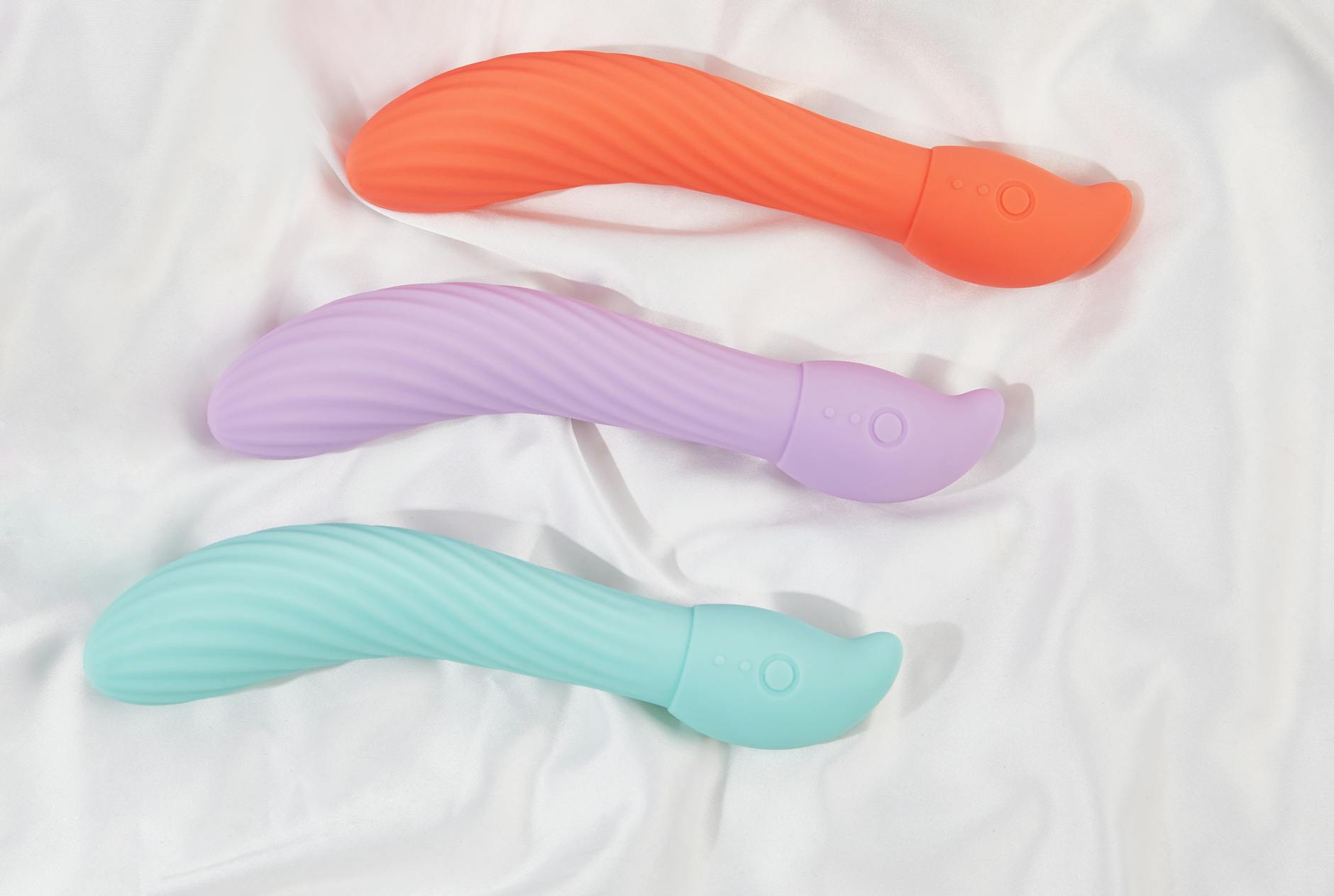
Here's what you need to know about how different vibrators actually work
You've probably used a traditional vibrator. It buzzes. You apply it. It feels like pressure plus vibration, usually in a rapid, predictable pattern. That's been the default for decades, and for many people, it works fine. But for many others, it doesn't. They plateau quickly, need increasingly higher settings, feel numb after a few minutes, or find that the constant buzz triggers fatigue rather than pleasure.
Then they try a lemon vibrator. Air-suction lemon sexual toys work on an entirely different principle, and the difference in sensation can be shocking. This post is for anyone who's felt "meh" on traditional vibrators and wants to understand why a suction-based clitoral vibrator might feel like a completely different experience.
The mechanical difference: buzz versus suction
A traditional vibrator sends 5,000 to 10,000 vibrations per second directly into tissue. It's fast, consistent, and feels like constant contact and movement combined. Your clitoris receives all that stimulation as pressure and micro-vibrations layered together.
A lemon clitoral vibrator works differently. Instead of vibration, it creates gentle suction around the clitoral head. Think of it like a soft cup that creates a pulse, a release, a pulse again. No direct contact. No friction. Just rhythmic pressure changes that stimulate the clitoral nerve bundle without the mechanical wear of rubbing or constant high-frequency buzz.
Here's why that distinction matters: the clitoris has about 8,000 nerve endings concentrated in a small area. A traditional vibrator is trying to activate all of them through direct, repeated pressure. A lemon vibrator activates them through rhythmic suction, which is gentler and, for many bodies, significantly more effective.
Why suction wins for intensity without fatigue
One of the most common complaints I hear from people using traditional vibrators is that they hit a wall. They feel great for the first 10 or 15 minutes, then the sensation flattens. You turn up the power. Still nothing. You're chasing a feeling that's getting further away, not closer. That's vibration fatigue, and it's a real neurological phenomenon.
Your nerves adapt to constant, predictable input. It's called desensitization. The more consistent the stimulus, the faster your nervous system stops fully registering it. Traditional vibrators are maximally consistent, so they trigger desensitization fastest.
Suction-based lemon vibrators avoid that trap. The sensation is rhythmic but not constant. There's a pulse pattern, a release, a rebuild. That variation means your nerve endings don't adapt as quickly. Many users report being able to use air-suction vibrators for longer sessions without hitting that numbing wall. Some feel stronger sensations on lower power settings because the mechanism is fundamentally more efficient at stimulating the target nerves.
The sensation profile: what's actually different when you use one
Let me be specific about what people report. With a traditional vibrator, you often feel the vibration most intensely at the point of contact. It's a forward, pressing feeling. Many women describe it as a surface sensation.
With a lemon vibrator, users consistently describe the sensation as deeper, more internal, more localized to the pleasure centers of the clitoris itself. Some say it feels like the toy is creating gentle suction into the tissue. Others say it feels like pressure that releases, pressure that releases, in a rhythm their body naturally wants to follow. The sensation often travels differently too. Traditional vibrators tend to feel localized. Suction vibrators often trigger a chain reaction that spreads up into the body.
That difference in sensation profile is huge. It means that if traditional vibrators have felt "okay but not life-changing" for you, a lemon vibrator might feel dramatically different because it's engaging your nerve tissue in a different way.
Why the lem vibrator works better for sensitive or less sensitive bodies
One common misconception is that air-suction vibrators are for people with highly sensitive clitorises. Actually, it's the opposite. Because suction distributes pressure across a broader area than a vibration point, it can actually feel less overwhelming for people with heightened sensitivity.
At the same time, because the suction mechanism is more efficient at nerve stimulation than buzzing, people with lower sensitivity or who experience numbness after vibrator use often find that a lemon clitoral vibrator cuts through that faster and stronger. You're not trying to wake up nerves with faster and faster vibrations. You're stimulating them through a fundamentally different physical action.
This is one reason why the best lemon vibrator for sensitive clits often works for both ends of the sensitivity spectrum. The mechanism itself is gentler and more effective simultaneously.
How lemon vibrators reduce the recovery period after use
Remember vibration fatigue? That sluggish, numb feeling after 20 minutes of traditional vibrator use? It doesn't happen the same way with air-suction toys. Because your nerves aren't being bombarded with constant high-frequency input, they recover faster afterward. Many users report that they can use a lem vibrator, take a break, and then use it again shortly after without that glazed-over sensation.
That recovery difference is partly neurological and partly about tissue impact. Traditional vibrators create micro-trauma from repeated friction, even gentle friction. Your tissue needs time to recover. Suction creates pressure changes but not the same mechanical wear. Your nervous system and your physical tissue both recover more quickly.
If you're interested in how long it takes to recover sensation after your first lemon vibrator session, the answer for most people is measured in minutes, not hours.
Why lemon sexual toys feel different for different people
Not every person with a vulva will automatically find lemon vibrators better than traditional ones. But most report a noticeable difference, and that difference tends to break down into a few patterns.
People with less responsive clitorises or who've experienced numbness often feel like air-suction finally "works." People who've always climaxed easily but are curious about intensity often report orgasms that feel sharper, more concentrated, or longer-lasting. People who feel overstimulated by buzz often find suction feels more balanced. People who've struggled with partners using vibrators during partnered play often find that a lemon vibrator is easier to incorporate because it's not numbing both people.
The pattern is clear: suction addresses problems that vibration creates. That doesn't mean suction is universally better. It means suction is better for a different range of bodies and a different range of circumstances.
The practical advantage: battery life and power
This is the unglamorous part, but it matters. Traditional vibrators need a lot of power to maintain those 5,000+ vibrations per second. Air-suction vibrators require less power because they're not fighting friction or repeatedly moving mass back and forth. That means lem vibrators typically have longer battery life on a single charge, and they can maintain their full intensity even as the battery depletes.
That's not just convenient. It's significant for pleasure, because it means your last orgasm of the session feels the same as your first one. Traditional vibrators often lose intensity as the battery drains, which can break momentum at exactly the wrong moment.
Which mechanism is right for your body
Honestly, you won't know until you try. If you've been using traditional vibrators and they work brilliantly for you, no reason to change. But if you've felt like something's missing, if you've experienced that numbing plateau, or if you're curious about whether a completely different stimulation approach might unlock something new, a lemon clitoral vibrator is worth exploring. Many people find that switching from buzz to suction is like discovering a completely different category of pleasure.
The best part? You don't need to commit to a full collection. A single lemon vibrator can clarify whether air-suction is your thing. Most people know within their first session.
FAQ: Questions about lemon vibrators versus traditional vibrators
Do lemon vibrators work for everyone?
Most people report a noticeable difference, but "better" is subjective. Some people prefer the intensity of traditional vibrators. Others find suction feels more gentle or more intense depending on the setting. The key difference is that suction works through a different nerve pathway, so if traditional vibrators have felt flat or numb, air-suction often feels revelatory. The best way to know is to try one.
Can you use a lemon vibrator with a partner if they prefer traditional vibrators?
Absolutely. You both get your preferred experience, and many couples find that switching between tools during partnered play keeps things fresh. Some partners actually prefer not being involved with the vibrator at all, which becomes easier if you're using a device designed for your solo pleasure.
Will a lemon vibrator cause numbness like traditional vibrators do?
Much less likely. Because air-suction stimulates through rhythm and pressure change rather than constant micro-vibrations, your nerves don't adapt as quickly. Most users report being able to use them for extended sessions without hitting that plateau. If numbness does occur, it's usually much further into a session than with traditional vibrators.
How is the sensation different if you have a less sensitive clitoris?
For people whose clitoris needs more stimulation to respond, the suction mechanism is often more efficient than vibration. You're engaging nerve endings through a fundamentally different action, which sometimes creates breakthrough intensity even at lower power settings. Many people with this experience find that a lemon vibrator requires less time and effort to reach climax.
Are lemon vibrators quieter than traditional vibrators?
Yes, significantly. Air-suction produces a gentle pulsing sound rather than a buzz. If discretion matters to you (noise level, travel, privacy), that's a real practical advantage beyond pleasure.
Can lemon vibrators be used if you don't produce much natural lubrication?
Yes, and often very well. Because suction doesn't require friction, you actually need less lubrication. Some people find that air-suction vibrators work better when lubrication is minimal, because the seal is more effective. If you use lube, water-based is ideal, though you'll need less than with traditional vibrators.
The bottom line
Lemon vibrators aren't better for everyone, but they're dramatically better for most people compared to traditional vibrators. The mechanism is fundamentally different, which means the sensation is fundamentally different. If you've felt disappointed by buzz vibrators, if you've experienced quick numbing, or if you're just curious about trying something that works through a completely different principle, an air-suction clitoral vibrator is worth your time. Your body might surprise you with how it responds.
For more on tailoring your experience, explore how to maintain pleasure sensitivity with lemon vibrators long-term or check out guidance on why lemon vibrators work better for different body types.
Questions? Reach out to Hello Nancy. We're here to help you find what actually works for your body.