
Let's be real about this moment
You're dating someone new. Things are getting physical. And you're wondering: when do I mention the vibrator? How do I not sound weird or demanding? What if they think I'm saying their touch isn't enough?
These questions are normal. They're also solvable. The difference between an awkward conversation and one that builds intimacy comes down to timing, framing, and honesty about what you actually want.
Why the timing matters (and it's not what you think)
Here's the thing most people get wrong: they wait too long. They wait until clothes are off and things are heating up, then suddenly bring it out like a surprise ingredient. Your partner's brain goes from "I'm enjoying this" to "Wait, what's happening?" in 0.3 seconds. Defensiveness kicks in. Confusion follows.
Introduce the idea before you introduce the toy. Ideally, this conversation happens when you're both clothed, neither of you is aroused, and there's zero pressure. A good window is early in dating, probably by date three or four. Not on date one (too intense signal), not three months in (implies you've been hiding it).
The sweet spot is the stage where you're already talking about preferences. Someone mentions something they like in bed. You laugh about past partners. Sex is clearly a thing you're both thinking about. That's your moment.
How to open the conversation without sounding clinical
Don't say: "I think we should discuss introducing adult novelties into our intimate practice."
Do say something more like: "So I have a clitoral vibrator that I really love. I'm not saying we have to use it together, but I wanted you to know it exists. Some people feel weird about that stuff, and I'd rather just be upfront."
Notice what's happening there:
- You're being matter-of-fact, not apologetic.
- You're acknowledging that they might have feelings about it.
- You're not framing it as a request yet.
- You're being specific (vibrator, not "toy" or "device").
This is radically honest. It removes the mystery and the shame in one sentence. Most partners will respond with curiosity, not judgment. Some will ask questions. That's good. Answer them straight.
What your partner might worry about (and how to address it)
Three concerns come up repeatedly in my practice.
"Does this mean I'm not enough?" This is the big one. Reframe it: "It's not about you being enough or not enough. It's about me exploring pleasure in different ways. You with a vibrator feels different than a vibrator alone, and that's kind of the point." Invite them to use it together. Let them experience that difference. Most partners who start worried end up genuinely enjoying it.
"I don't know how to use it correctly." Offer to show them. Or better: sit with them while they explore it, no pressure, just curiosity. A lemon vibrator's air-suction technology is intuitive once you feel it. Lowering the learning curve lowers the awkwardness.
"This seems like a lot of work." Sometimes a partner worries that introducing toys means sex has to get complicated or choreographed. Reassure them: sometimes you use it, sometimes you don't. There's no performance expectation. It's just another tool in your toolkit, not a requirement.
When your partner pushes back (and how to stay calm)
Some people will resist. "I feel like that's emasculating." "I don't think we need that." "Isn't that kind of weird?"
First: don't get defensive. Their reaction says nothing about you. It says something about their upbringing, their insecurities, or their own discomfort with sexuality. That's data, not rejection.
Second: don't argue them into it. If you push, they push back harder. Instead, acknowledge their feeling and hold your boundary: "I hear that it feels weird to you. That makes sense. I'm not asking you to love it. I'm just asking you to be open to me using it, because my pleasure matters to me."
Then give them space. Often, the resistance melts once they realize you're not trying to change them or prove a point. You're just asking for permission to be yourself.
The practical introduction
Once they've agreed you can bring it up again, here's how to actually bring it into a sexual moment:
Don't ambush them. Say something like: "I want to use my vibrator tonight. Are you comfortable with that?" They might say yes. They might say "I want to try it with you." They might say "Not tonight." All three are fine.
When you do use it, especially the first time with a partner, go slow. Let them watch. Let them feel curious instead of pressured. Some lemon vibrators like the Lem work beautifully during partner play. The stimulation is distinct enough that your partner can feel the difference in your body's response. That evidence matters more than any explanation.
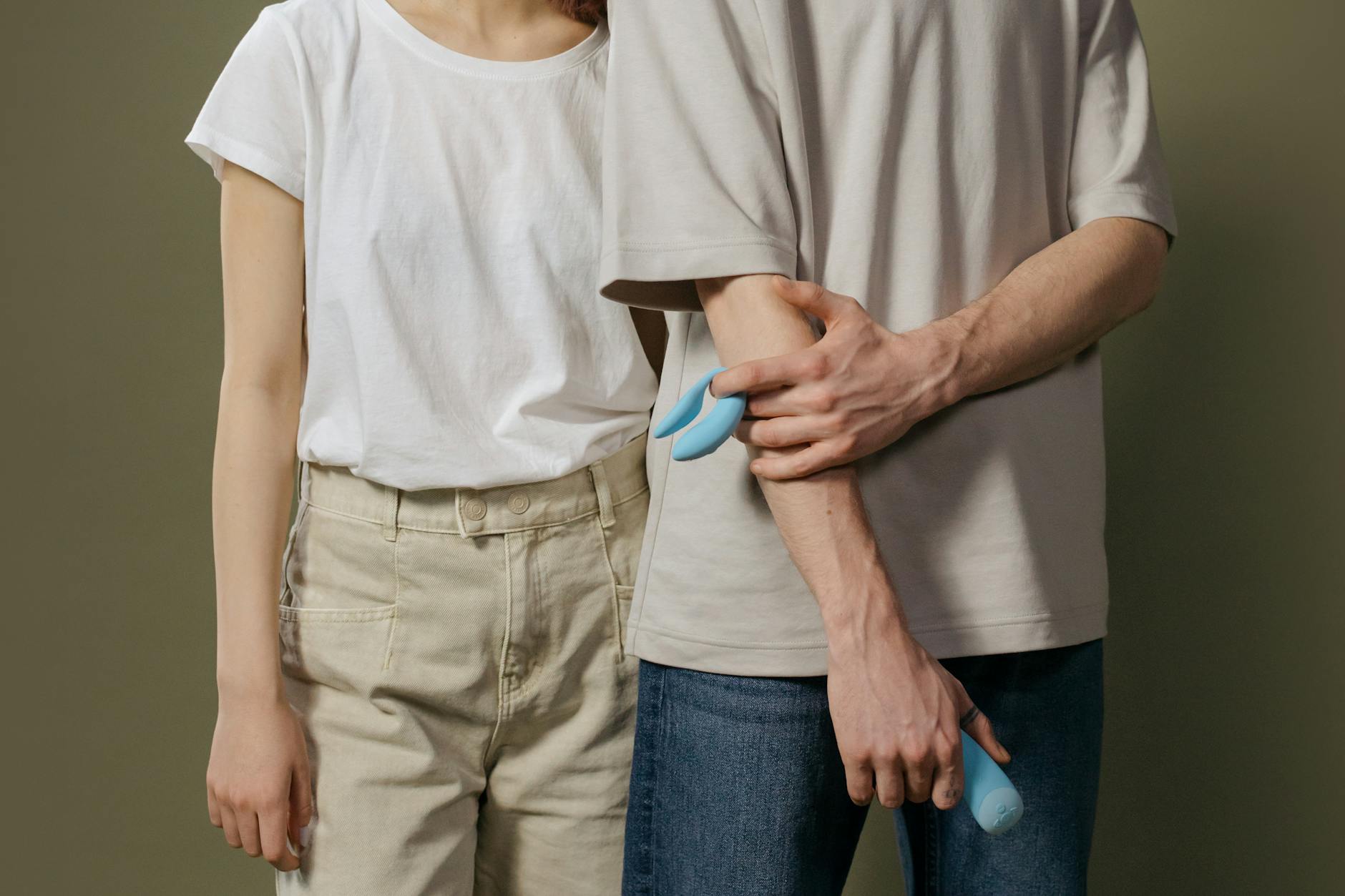
Photo by cottonbro studio on Pexels
What this conversation is really about
Separate the toy from the relationship skill you're building. You're not introducing a vibrator. You're introducing vulnerability, honesty, and the idea that pleasure is worth talking about. Those are foundation-level intimacy skills. Partners who can talk about this honestly can talk about anything.
If a partner refuses to engage with this conversation, that's information too. Not because toys are essential to every relationship, but because willingness to listen and adapt is. If they can't honor something that matters to you, especially something this low-stakes, that's a pattern worth noticing early.
When they want to participate (the best case)
If your partner gets curious and wants to use it with you or on you, you've just leveled up. This is how couples move from "we have okay sex" to "we actually explore together." The confidence to say what you want, be heard, and try new things together transforms everything downstream.
Take the pressure off. Tell them there's no right way. The vibrator is just feedback. If something feels good, do more of it. If it doesn't, try something else. That's the whole game.
Setting yourself up for success long-term
After this conversation lands and you've actually used the vibrator together, something shifts. The shame lifts. The mystery evaporates. You become the person who talks about pleasure openly, and your partner becomes someone who listens.
That matters more than the toy ever will. The Lem or any lemon clitoral vibrator is a tool. But the relationship where both people say what they want and actually listen? That's priceless.
People also ask
What if we've been dating for six months and I haven't mentioned it yet?
Bring it up now. Longer relationships aren't harder to navigate this in, they're easier. You have more trust built. Frame it simply: "I realized I never mentioned this, but I have a vibrator I love using. I want you to know." Then follow the same conversation structure. The delay doesn't matter nearly as much as the honesty does.
Is it weird to mention a vibrator before you've even slept together?
No. In fact, it's often cleaner. Before sex happens, there's less emotional intensity around the conversation. You can be matter-of-fact. "I'm someone who uses toys for solo pleasure and sometimes with partners. That's just part of who I am." Most people appreciate the upfront honesty.
What if my partner wants to pick out the vibrator with me?
That's wonderful. It signals real buy-in. Shopping together (even online) makes it collaborative instead of something you're bringing into the relationship unilaterally. If they want to be involved in the choice, let them. The Lem or other lemon vibrators are available, and exploring options together builds anticipation.
How do I know if they're genuinely open or just saying yes to keep me happy?
Watch their behavior, not their words. Do they ask questions? Do they seem curious or just compliant? Real openness looks like engagement. Someone just appeasing you will nod along but never bring it up again. Someone genuinely curious will ask when you want to use it or how it feels. Give them space to show you which one they are.
What if they suggest we use it and I get self-conscious?
Stop, pause, and say so. "I'm feeling a little awkward right now." Ninety percent of the time, your partner will match your honesty with their own. "Me too, actually. But I want to try." The conversation matters more than the perfect execution. Awkwardness is normal. Push through it together.
Should I suggest using it during partner sex right away or wait?
Let them decide. Some people want to try it immediately. Others want a few sessions together first. There's no timeline. The best first experience is one where both people feel genuinely ready, not pressured. If they seem hesitant, suggest using it while they watch first. Lower stakes. Same pleasure for you, less performance anxiety for them.
Introducing pleasure toys to a new partner isn't complicated when you stop making it complicated. Be honest. Give them space to react. Listen to what they actually need, not what you're afraid they might say. That's how you build the kind of relationship where pleasure isn't hidden or shameful. It's just part of the conversation. And from there, everything gets better.