Lemon Vibrator for Sensitive Clitoris: How Air-Suction Feels Gentler Than Buzz
Let's be real. If you've ever used a traditional vibrator on sensitive tissue and felt pain, numbness, or that "too much" sensation that makes you want to quit, you're not broken. Your clitoris is just telling you it needs a different kind of stimulation.
Here's what most people don't realize: not all vibrators feel the same on sensitive skin. A lemon vibrator like the Lem uses air-suction technology, which works completely differently from the buzz-and-pressure model of traditional vibrators. For some people, that difference is everything.
How traditional vibrators stimulate (and why they sometimes hurt)
A standard vibrator works through direct mechanical oscillation. The motor vibrates back and forth at a set frequency (typically 7,000 to 13,000 Hz), and that vibration transfers directly to your tissue through the toy's surface. It's fast, concentrated, and puts pressure on a small area.
This works brilliantly for some people. For others, especially those with high clitoral sensitivity, it can feel like static electricity, a buzzing ache, or even pain. Why? Because the clitoris has dense nerve clustering in a tiny space. Intense, localized vibration can overstimulate those nerves faster than the rest of your nervous system can process pleasure from it.
Think of it like turning up a speaker until the sound distorts. The volume isn't the problem. The concentration is.
What air-suction does differently
Air-suction technology, the core of lemon vibrators, works on a different principle entirely. Instead of vibrating, it creates rhythmic pulses of gentle air pressure around the clitoris, then releases it. This creates a sensation that feels more like a wave or a gentle pulse than a buzz.
The key difference: the stimulation is diffuse, not concentrated. The Lem creates a seal around the clitoris (not inside), and the suction pattern stimulates a wider area of tissue, not just one point. This spreads the neural signal across more nerve endings instead of hammering the same spot.
For sensitive clitorises, this is often the difference between pain and pleasure.
Why sensitive clitorises respond to the Lem
Three reasons air-suction works where buzzing doesn't:
1. Lower surface pressure. The Lem's suction is gentle, never forceful. You're not fighting the physical weight or pressure of the device against your body. There's no grinding, no constant contact, no friction. This matters enormously for people with thin tissue, inflammation, or nerve pain.
2. Wider stimulation area. Because the Lem works around the clitoris rather than on a single point, it distributes sensation. Your clitoris has more than 8,000 nerve endings, and they're not all in one spot. Spreading stimulation across more of them means the signal feels more integrated and less like overload.
3. Variable pattern flexibility. The Lem has multiple pulse patterns that you can layer and adjust. You're not locked into one frequency. You can start with pattern 1 (the gentlest) and control exactly how much intensity you want. Traditional vibrators often have fewer settings and higher baseline intensity.
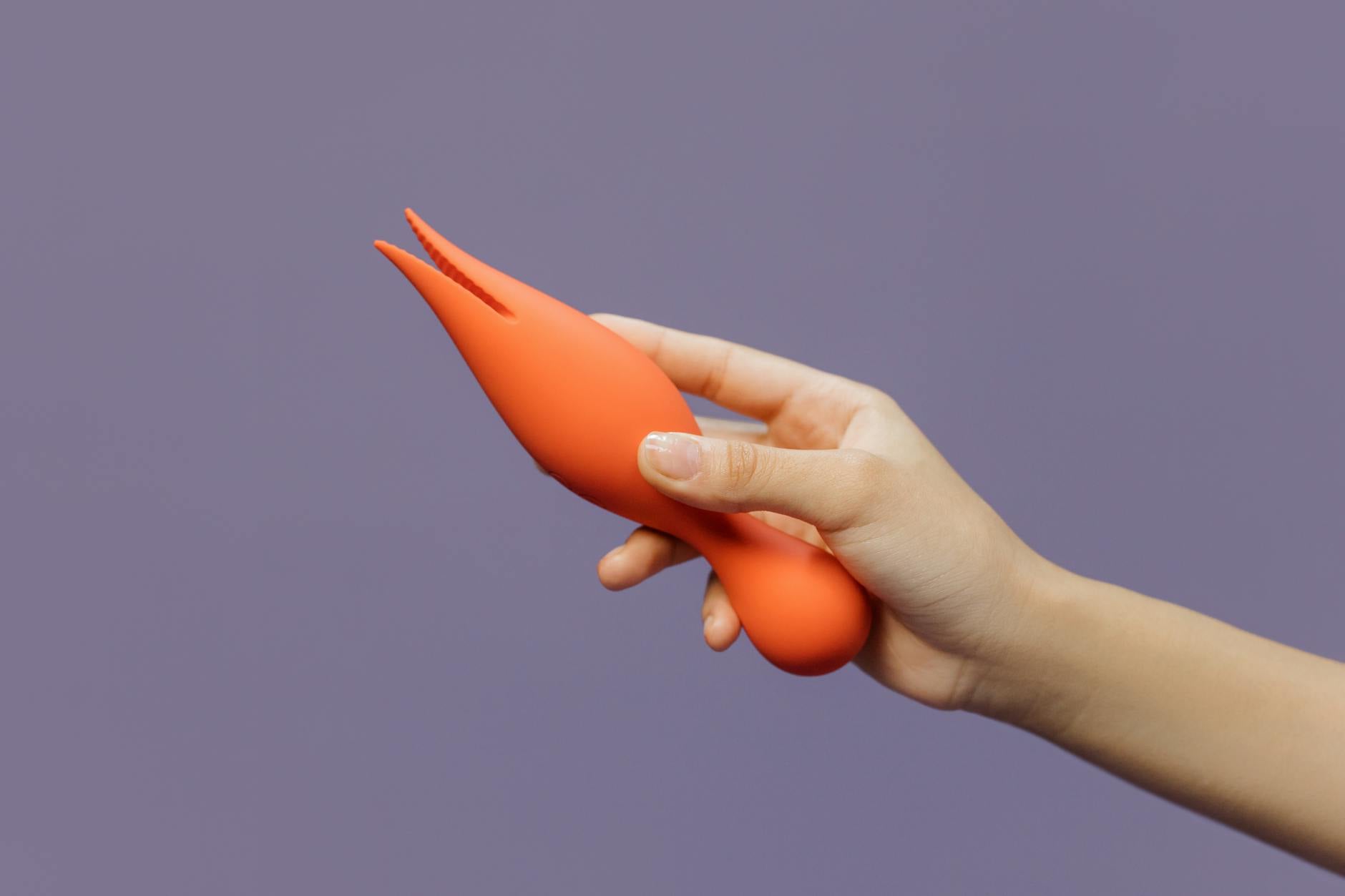
Photo by cottonbro studio on Pexels
When to switch from buzz to air-suction
If any of these sound familiar, you might benefit from trying a lemon clitoral vibrator like the Lem:
- Traditional vibrators make your clitoris feel numb, raw, or tender after a few minutes
- You find yourself turning the vibrator off because it feels too intense, even on the lowest setting
- You have a history of vulvodynia, vaginismus, or other clitoral pain conditions
- Your partner's touch feels better than the vibrator because it's softer and more diffuse
- You used to enjoy vibrators, but your sensitivity has increased over time
- You have inflammatory conditions (lichen sclerosus, dermatitis) that make direct pressure painful
None of these mean you can't have pleasure. They mean you need a different delivery method.
How to use the Lem if your clitoris is sensitive
Start small. Literally.
- Use patterns 1 and 2 exclusively for the first week. Don't level-jump.
- Keep a water-based lubricant nearby. Even if you don't feel like you need it, it reduces friction and makes the seal feel softer.
- Start with just 5 to 10 minutes. Sensitive tissue needs longer to warm up, but shorter initial sessions help you calibrate what "pleasure" versus "overload" feels like.
- Rest between sessions. If your clitoris was always met with buzzing pressure, it needs time to recover and recalibrate. Three to four days between sessions for the first month is reasonable.
- Avoid the urge to chase the sensation. A common mistake: once you find a pattern that feels good, you tense up and push the device harder. Your clitoris doesn't need that. Back off slightly. Let the sensation come to you.
Most people find that after two to three weeks, their sensitivity threshold shifts. The air-suction starts feeling more like a wave than a shock. That's your nervous system learning a new language.
The science of why gentler works better for sensitive tissue
Here's something worth knowing: more intensity doesn't create more pleasure. It just creates more sensation. And for a sensitive clitoris, those aren't the same thing.
When nerve endings are already firing at high capacity (due to inflammation, past pain, or just individual wiring), hammering them with vibration creates noise, not signal. It's cognitive load on a sensory level. Your brain can't translate it into pleasure. It translates it into "stop."
Air-suction works because it creates rhythmic pulses instead of continuous buzz. Rhythm is something your nervous system can integrate more easily. It has a beginning, a peak, and a release. Your body knows what to do with that pattern.
This is why many people who thought they couldn't orgasm with toys report their first air-suction orgasm within one to two weeks of using the Lem. It's not that they couldn't orgasm. Their nervous system just needed a different kind of input.
Red flags: When to see a doctor instead
If using the Lem (or any toy) causes sharp pain, burning that lasts hours, or unusual discharge, stop and contact your gynecologist. Sensitivity is normal. Pain is a signal that something else might be going on.
Conditions like vulvodynia, lichen sclerosus, or dermatitis require clinical care, not just a different toy. A good gynecologist can help you figure out whether the pain is structural, inflammatory, or neurological. That diagnosis changes how you approach pleasure toys.
Once you've ruled out a medical issue, air-suction technology is often part of the solution. But check first.
FAQ
Can you use a lemon vibrator if you have vaginismus?
Maybe, and carefully. Vaginismus is involuntary pelvic floor tension. A vibrator doesn't treat that directly. What helps is relaxation and gradual desensitization. Some people find that the gentle rhythm of air-suction (as opposed to intense buzz) is less triggering, making relaxation easier. Start with very short sessions and external-only stimulation. If pain or tension increases, pause and work with a pelvic floor therapist.
Does the Lem work if you've been numb from using traditional vibrators?
Often yes, but not immediately. If your clitoris has been overstimulated by intense vibration, it can feel numb for days or weeks after. That's temporary. Your nerve endings aren't damaged. They're just exhausted. Give yourself two to four weeks of no vibrator use, then introduce the Lem on the gentlest patterns. The diffuse air-suction is often the key to rebuilding sensitivity because it doesn't retraumatize the tissue the way buzzing might.
Is air-suction less intense, or just different?
Different, primarily. The Lem has multiple intensity levels, so you can go intense if you want. What changes is the quality of the sensation. Air-suction at high intensity still feels like waves and pulses. A traditional vibrator at high intensity feels like drilling. For sensitive clitorises, that difference in quality matters more than the intensity level.
How long does it take to adjust to the Lem if I've only used traditional vibrators?
Two to four weeks, typically. Your brain has to learn that pleasure can feel like rhythmic pulses instead of constant buzz. Once that rewires, most people find the Lem either equal to or better than what they used before. Patience in the first month pays off.
Can men with sensitive penises use air-suction toys?
The Lem is designed for external clitoral stimulation, but the principle applies: air-suction is gentler on sensitive tissue than vibration. If you have a sensitive glans or frenulum, you might explore whether air-suction devices designed for penises exist. The technology works for any sensitive external tissue.
What if the Lem still feels too intense?
You have a few options. One: use it through a thin barrier (some people use a thin cloth over the opening to soften the sensation further). Two: use it at the very edge of the pubic mound, slightly off the clitoris, so the sensation is more indirect. Three: keep exploring. Your sensitivity might take longer than two weeks to recalibrate. Give it six weeks before deciding it's not for you.
The bottom line
A sensitive clitoris isn't a flaw. It's just a clitoris that needs the right kind of input. If traditional vibrators have never worked for you, the problem probably isn't your capacity for pleasure. It's the tool.
Air-suction technology, like the Lem, offers a completely different approach. It spreads stimulation, reduces pressure, and creates rhythm instead of relentless buzz. For many people with sensitive tissue, that difference is the key to pleasure they thought they'd lost.
Your clitoris doesn't need you to toughen up. It needs you to listen to what actually feels good. A lemon vibrator might be exactly what that conversation sounds like.
If you'd like to discuss which approach might work best for your body and history, reach out to us. We're here to help you find what works, not push you toward a one-size-fits-all answer.