The gap nobody mentions
You used to want each other. Now you want sleep. That's not a failure. That's parenting.
What happens between the first kid and year three is that intimacy doesn't disappear. It calcifies. You share a bed, a mortgage, and three kids under eight, but somewhere in the blur of school pickups and bedtime routines, sex became something that happens to you instead of something you choose together. And now, when you finally have ten minutes alone, the silence feels louder than the connection.
This is where most couples get stuck. They assume the spark died. It didn't. It's just buried under exhaustion, touched-out skin, and the low hum of resentment nobody's naming out loud.
What actually happens to desire after kids
Your body changes when you become a parent. Not just the physical toll of pregnancy or the hormonal shift postpartum, but your entire nervous system recalibrates. You're in low-grade survival mode for years. Your brain is running background processes: Is someone crying? Do I need to be somewhere? Your sympathetic nervous system stays activated, which is the exact opposite of what needs to happen for arousal.
Then there's touch depletion. You spend eight hours a day with small humans climbing on you, needing you, taking from your physical resources. By evening, the idea of someone else touching you triggers a protective response. You're touched out. Your partner feels that withdrawal as rejection. The gap widens.
But here's what's true: your capacity for pleasure hasn't died. Your body still works. Your brain still responds. What's missing is permission and structure.
Why lemon clitoral vibrators work differently for couples in this season
When you're both depleted, you need tools that cut through the fog. Lemon clitoral vibrators work better than traditional vibrators for external stimulation because they don't require the mental effort traditional vibrators do. You're not managing multiple speeds or trying to find the right rhythm. The suction sensation creates an immediate chain reaction in your nervous system that bypasses the thinking part of your brain.
For couples specifically, a lemon vibrator becomes permission. It signals that this isn't about performance. You're not trying to have earth-shattering sex. You're trying to remember what your bodies feel like to each other. That distinction matters.
The other reason lemon sexual toys help: they shift the power dynamic without conversation. If your partner usually feels responsible for your pleasure, handing them a Lemon vibrator and asking them to use it on you removes the pressure to "do it right." They can't mess up a suction device. They can experiment. You can both stop thinking and start feeling.
How to start the conversation
This is the part most couples skip, and it's why they end up frustrated.
Pick a time when you're not trying to have sex. Not in bed at night. Not when you're both wired from the day. Pick a regular moment. After the kids are asleep, over coffee on a Saturday, in the car alone. Say something simple: "I miss you. I miss us. I don't think it's about not wanting each other. I think we're just stuck." That's it. You're naming the gap without blame.
Then ask: "What if we tried something different?" Not "What if we had more sex?" That lands like failure. Try: "What if we used a tool that actually works for our current life instead of trying to recreate what we used to do?" Or even simpler: "I read about this thing. Interested?"
If your partner is hesitant about toys, this is key. Reframe it. A lemon clitoral vibrator isn't replacing them or suggesting they're not enough. It's acknowledging that parenting has changed your bodies and your nervous systems, and you're both smart enough to adapt.
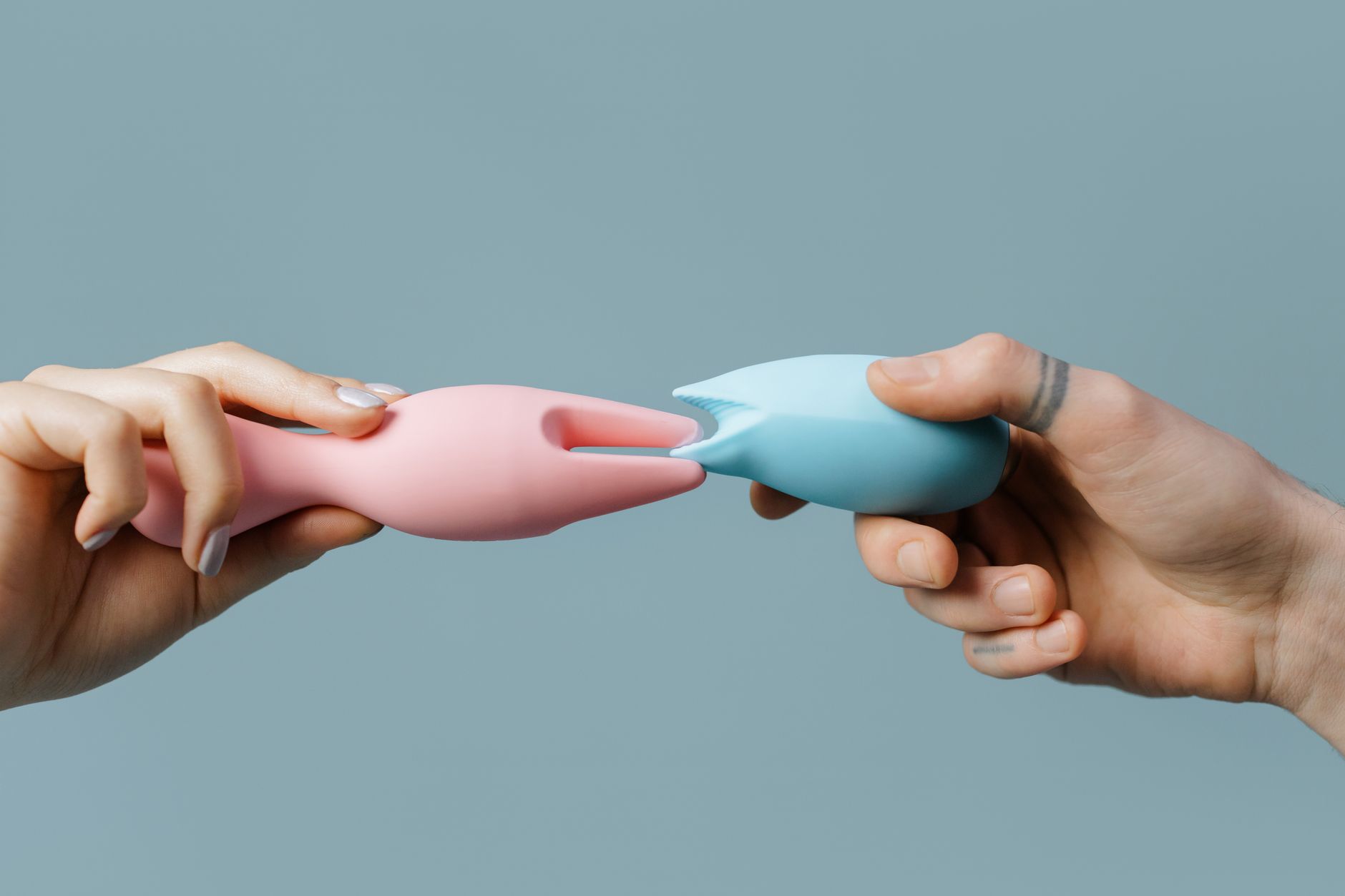
Photo by cottonbro studio on Pexels
The actual mechanics
Here's what works practically when both of you are depleted.
Start small. One partner isn't ready to strip down and perform on schedule. So don't. Set a timer for 15 minutes, no kids, after they're asleep. One of you sits or lies down, the other holds the Lemon vibrator. You don't need to make it a whole production. You're rediscovering touch. The suction sensation builds arousal quickly, which means your nervous system doesn't have time to spiral into "am I taking too long" or "do they still want me." The sensation is so direct that it pulls you both into the present moment.
Start on the lowest suction level. Let your body remember what pleasure feels like before you're asking for orgasm. That's the goal in weeks one and two. Not orgasm. Sensation. Presence.
Then, once you've both done that solo or together a few times, try using a Lemon vibrator during partnered foreplay. Your partner can use it while you touch them, or you can trade off. The point is collaborative pleasure, not performance. Nobody's watching the clock. Nobody's monitoring whether it's working. You're both in it.
Why this actually rebuilds connection
Parents who are touched out don't want more sex. They want to feel chosen. A Lemon clitoral vibrator makes that happen because it forces intentionality. You can't half-ass this. You're either present or you're not.
When your partner hands you a vibrator and says "I want you to feel good," that's vulnerable. When you let them, that's vulnerable too. Vulnerability is what knits couples back together. Not passion. Not performance. Vulnerability and showing up despite being exhausted.
How to use a lemon vibrator to deepen intimacy with a long-term partner is actually about creating moments where you're choosing each other again, in small ways, in real bodies, in real life.
The permission piece
This is where I see most couples stall. You have the Lemon vibrator. You've tried it once. It worked. Then nothing happens for three weeks because neither of you wants to be the one to suggest it again.
Kill that. Establish a rhythm. Not sex, rhythm. Every Sunday evening, 20 minutes. Or Wednesday after the kids are asleep. Pick a day. Make it boring and reliable. Your nervous system will settle into it faster than you think. Predictability is arousal for exhausted parents.
And here's the thing nobody tells you: using a lemon clitoral vibrator together isn't the end goal. It's the warm-up to rebuilding all the other ways you touch. Massage. Kissing. Sleeping skin-to-skin. Those things will come back if you stop waiting for them to happen spontaneously and you actually schedule them like they matter. Because they do.
When to call in support
If you've tried this and you're still feeling disconnected, that's not a failure. That's information. There might be deeper resentment about the division of labor at home. One of you might be dealing with depression. One might be grieving the version of your life you thought you'd have. Those are real conversations to have, possibly with a therapist who specializes in postpartum and mid-life relationship transitions.
A Lemon vibrator is a beautiful tool for couples who are stuck in a rut but still fundamentally interested in each other. It's not a solution for couples who need to rebuild trust or address ongoing conflict. Know the difference.
The long view
Your kids will eventually sleep through the night. They'll go to school. One day they'll move out and you'll look at your partner across the kitchen and realize you barely know them anymore. That's when couples either rebuild or realize they've been living as roommates for years.
Use this season now. Use the Lemon vibrator. Use the permission it gives you to choose each other in small, practical ways. Your nervous system will remember. Your body will remember. Your partner will feel seen. And when the kids get older and you actually have time and energy again, you'll have momentum instead of emptiness.
Frequently asked questions
How often should we use a lemon vibrator if we're just starting to reconnect?
Start with once a week, 15 to 20 minutes. You're rebuilding a habit and a sense of safety around intimacy. Consistency matters more than intensity. Once that feels normal, you can increase frequency or duration based on what actually happens in your life. Some weeks you'll manage twice. Some weeks you'll go two weeks between sessions. That's fine. The goal is returning to intentional touch, not hitting a performance target.
What if using a toy makes my partner feel insecure or replaced?
That feeling is often about deeper stuff: fear of aging, worry about being wanted, or previous relationships where toys were used as a rejection. Talk about it directly. Explain that you're using it together, not because they're not enough. Show them. Invite them to hold it. Let them see your response. Insecurity usually dissolves when it's met with transparency instead of defensiveness.
Can we use a lemon vibrator if we haven't had sex in over a year?
Absolutely. Actually, that long of a gap makes starting with a vibrator even smarter. You're not trying to jump back into full sex. You're rebuilding physical language from the ground up. A Lemon clitoral vibrator lets you do that without the pressure of traditional partnered sex. You can spend weeks just rediscovering sensation and presence. The rest comes after.
What if one of us has a lower sex drive now that we're parents?
That's almost everyone. Parenting tanks libido because it tanks sleep, triggers stress hormones, and depletes your body's resources. That's not broken. That's normal. The fix isn't forcing desire. The fix is removing barriers to it. Regular rest, reduced resentment about childcare, and using tools like a Lemon vibrator that help your nervous system find arousal quickly. Desire rebuilds when the conditions support it, not when you're performing.
Is using a lemon vibrator with a partner the same as using it solo?
Completely different. Solo use is about knowing your own body. Partner use is about reestablishing safety and vulnerability with someone else. When your partner is holding the vibrator, you have to surrender. You have to let them see and feel your pleasure. That's the reconnection work. The vibrator is just the tool that makes it possible without all the performance pressure.
How do we move from vibrator use back to regular sex if we want to?
You don't have to. Some couples find that a Lemon vibrator becomes a permanent part of their intimate life, and that's wonderful. If you want to reintroduce partnered sex, you build from where you are. Use the vibrator together first. Then incorporate it into foreplay. Then gradually shift your focus back to penetration or other forms of partnered sex. Let your bodies tell you the pace. There's no timeline.
Resources and next steps
If you're looking for more on rebuilding intimacy after major life transitions, the Gottman Institute has solid research on couples in this exact season. The book "Come As You Are" by Emily Nagoski is helpful for understanding how nervous system states affect desire. And practically speaking, the Lemon Vibrator Store buying guide can help you pick the right tool for your specific needs as a couple.
Start small. Talk openly. Show up. Your bodies haven't forgotten. Your connection hasn't died. It's just been sleeping.