Let's talk about arousal that refuses to cooperate
Here's what nobody tells you: your desire isn't broken just because it's inconsistent. One week you're thinking about sex at random moments. The next week, the thought barely registers. You're not losing your edge. You're human.
Inconsistent arousal is one of the most common complaints I hear from people trying to navigate their own pleasure, and it's almost always met with shame instead of curiosity. The assumption is that "good" desire is steady, responsive, and available on demand. Spoiler: it's not.
Why arousal patterns fluctuate (and it's not all in your head)
Arousal lives at the intersection of three systems: your nervous system, your hormones, and your brain. When any of those shifts, the whole experience changes. This is science, not sentimentality.
Your nervous system responds to stress. High cortisol (the stress hormone) genuinely dampens sexual response at the neural level. Work deadlines, relationship friction, financial worry, family demands, sleep deprivation. These aren't just distracting. They're actively suppressing the biological pathways that generate desire.
Hormones fluctuate monthly, yearly, and across decades. Even if you think your cycle is "regular," your responsiveness to stimulation varies across the month. Estrogen peaks around ovulation and drops before your period. Testosterone (yes, everyone produces it) follows its own rhythm. This isn't subtle. It's measurable.
But here's what gets overlooked: your brain's arousal threshold is contextual. The same thought, touch, or scenario that ignites desire one day can feel completely neutral another day. Your brain isn't malfunctioning. It's responding to invisible variables. How much sleep did you get? Did you have good sex recently (or bad sex)? Are you holding tension in your body? Is your partner being attentive or checked out? All of these rewire your responsiveness in real time.

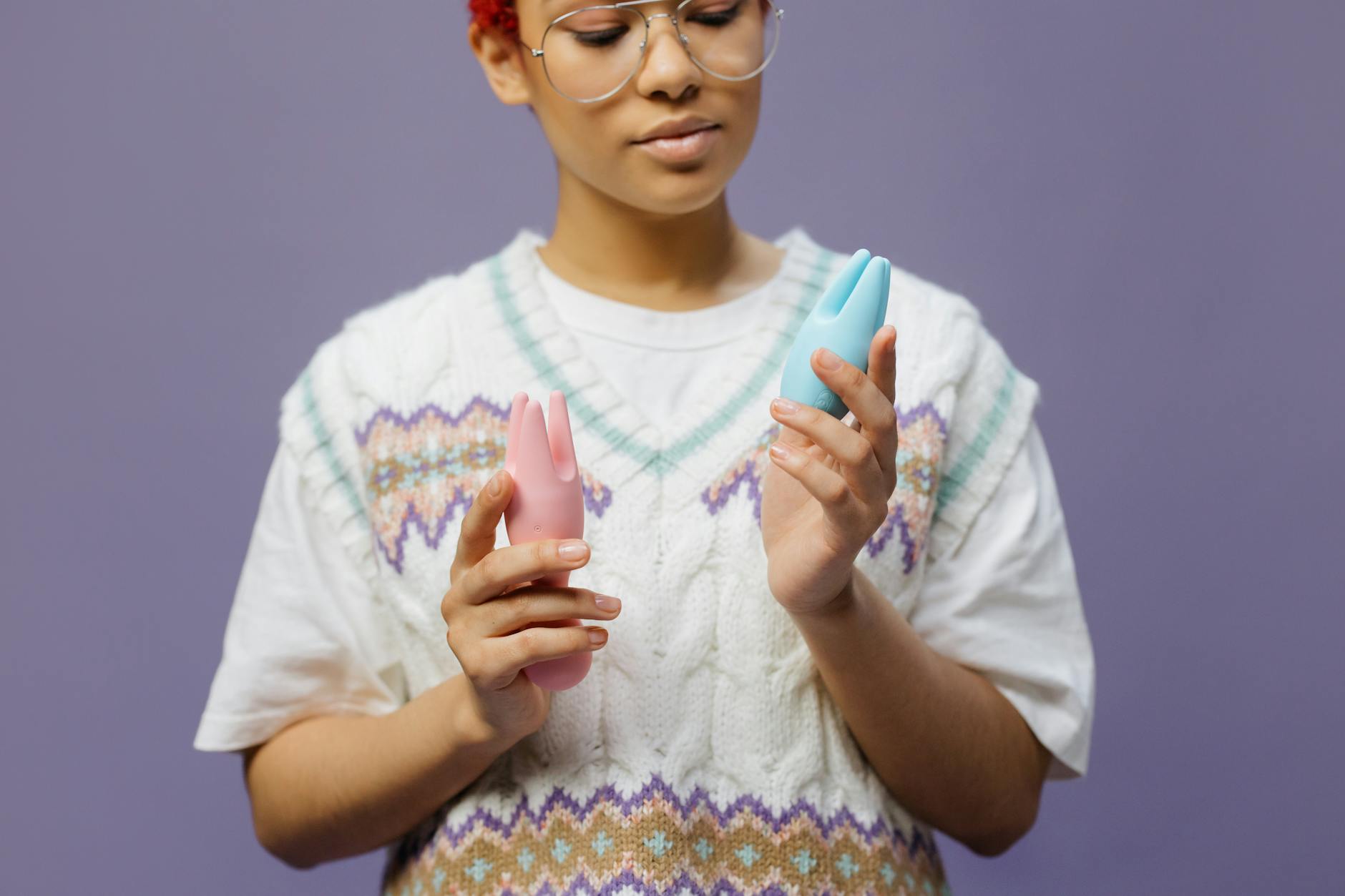
Photo by Ron Lach on Pexels
The problem with willpower and arousal
Most of us approach inconsistent desire the way we approach a morning run: push through it, manufacture the feeling, convince yourself it's worth it. This backfires spectacularly. Arousal cannot be muscled into existence. Trying to force desire when your nervous system isn't ready creates a feedback loop of frustration, failure, and shame.
This is where tool choice matters. A traditional vibrator (bullet, wand, whatever) often demands that you meet it halfway. You need baseline arousal, decent circulation, responsive nerve endings. It's friction-based stimulation. When arousal is faint or variable, friction can feel like work instead of pleasure.
Air-suction toys like the Lemon clitoral vibrator operate differently. Instead of vibration or friction, suction creates a gentler, more sensory-rich experience. It doesn't require you to be fully aroused to feel something. Even on low days, on numb days, on days when desire is nowhere in sight, suction can create a different kind of sensation. And sensation sometimes comes before arousal. Arousal isn't always the starting point. Sometimes it's the endpoint.
How inconsistent arousal looks across the month
Let me break down what I actually see in my clients' patterns:
The ovulation window (roughly day 10-16 of your cycle if you menstruate). This is peak testosterone time. Desire floods in. Nerve endings are more responsive. You might feel turned on by almost nothing. This is not your "true self." It's a biological peak.
The follicular phase (roughly day 1-9 before ovulation). Hormones are rising but not yet peaked. You're probably more interested in pleasure than you were during your period, but less spontaneously aroused than you'll be at ovulation. This is steady, exploratory energy.
The luteal phase (roughly day 16-28 after ovulation). Progesterone rises. Your nervous system becomes more sensitive to stress. Desire often dips. This isn't failure. It's biology. Some people feel almost asexual during this phase. Others maintain desire but need longer warm-up time. Both are normal.
Menstruation itself. For some people, arousal spikes because of the uterine contractions and increased pelvic blood flow. For others, pain, bloating, or bleeding dysphoria kills desire entirely. This variance is real, and it's not a problem to solve.
If you track these patterns for two or three months, you'll usually see your own rhythm emerge. Some people have predictable monthly fluctuations. Others have a much longer cycle. Still others seem genuinely random. All of these are within normal range.
The tool adjustment that makes a difference
When arousal is inconsistent, the key is choosing a device that works with your variable state instead of against it. Air-suction clitoral vibrators fit this perfectly because they offer something different: stimulation without friction.
Lower settings on a lemon sexual toy create a gentle suction rhythm that can feel interesting even when arousal is completely absent. You're not trying to climax. You're just exploring sensation. Often, five or ten minutes of gentle exploration creates enough physical response (increased blood flow, relaxation of the pelvic floor) that actual arousal can follow. The tool becomes the bridge, not the destination.
This is the opposite of forcing things. It's permission to start small and let sensation lead. Sometimes that leads to arousal and orgasm. Sometimes it leads to a pleasant body experience without climax. Both are wins when your baseline arousal is unreliable.
Start on the lowest setting, even lower than you think you need. The suction patterns on a quality lemon clitoral vibrator are designed to be stimulating at any intensity. You're not trying to "wake things up" with force. You're introducing sensation into a system that might not be ready for aggressive input.
The context piece (this matters more than you think)
Arousal doesn't exist in a vacuum. Everything in your life shapes how responsive your nervous system is.
If you're in a period of high stress or low sleep, accept that your arousal will be dampened. This is temporary. Don't interpret it as permanent loss of desire. Adjust your expectations accordingly. Maybe this isn't the week to expect orgasms. Maybe this is the week for gentle exploration with low pressure.
If your relationship has friction, your body knows it. You can't think your way out of this. Address the friction where possible, and expect that pleasure will be quieter until it resolves. Some people find that using a lemon vibrator solo is actually helpful during relationship rough patches because it separates personal pleasure from partner dynamics.
If you're on medications that affect arousal (antidepressants, blood pressure meds, hormonal birth control), that's not your personality. That's chemistry. Talk to your provider about whether the timing or dosage can shift. Sometimes it can, sometimes it can't. Either way, recognize that the inconsistency is drug-related, not desire-related.
The conversation to have with yourself
Inconsistent arousal often triggers a shame spiral: something is wrong with me, I'm broken, my partner should be more attractive to me, I'm aging out of desire. None of these are true. Arousal is a system, not a personality trait. Systems fluctuate.
The conversation that actually helps is different: what conditions help me feel interested in pleasure right now? What do I need from my body, my partner, my environment? How can I explore sensation without demanding that it lead somewhere? What does pleasure look like on a low-desire day versus a high-desire day?
Once you stop treating inconsistency as a failure, you can actually work with it. Some of my clients report that their most satisfying experiences come on low-arousal days because they've released the pressure to perform. They explore with curiosity instead of expectation. The lemon sucker becomes a tool for discovery instead of a goal-oriented device.
When to seek support
Inconsistent arousal is normal. Completely absent arousal for months at a time, after a period where you had desire, is worth exploring with a healthcare provider. This can signal depression, medication effects, hormonal changes, relationship issues, or medical conditions. You deserve to have that conversation.
If inconsistency is creating conflict in your relationship, a couples therapist or sex therapist can help you both understand what's actually happening. Your partner might think the inconsistency is about them. It usually isn't. Clearing that up takes pressure off everyone.
But if your arousal simply ebbs and flows in a predictable (or semi-predictable) way? That's your normal. That's your sexual rhythm. The goal isn't to make it flat-line steady. It's to understand it well enough to work with it.
FAQs: Arousal inconsistency and lemon vibrators
Why does my desire change so much from week to week?
Arousal is shaped by hormones, stress levels, sleep, relationship dynamics, medications, and your overall nervous system state. All of these fluctuate. That's not malfunction. That's biology responding to your actual life. Most people with hormonal cycles have predictable monthly patterns if they track them for a few months. Stress spikes, relationship friction, poor sleep, and major life changes all suppress arousal temporarily. The inconsistency you're seeing is usually a combination of these factors working together, not one broken thing.
Can a clitoral vibrator actually help with low-arousal days?
Yes, but in a different way than you might expect. On low-arousal days, you're usually not trying to climax quickly. Instead, air-suction vibrators create sensation and increase blood flow to the area, which sometimes allows arousal to follow. You're using the toy as an entry point, not a guaranteed outcome. If pleasure doesn't build to orgasm, that's fine. The point is that you're reconnecting with your body without shame or pressure. Often, consistent low-pressure exploration actually increases baseline desire over time because you're rewiring the association between pleasure and pressure.
Does the lemon vibrator work differently depending on my arousal level?
Absolutely. When arousal is high, suction patterns feel intense and responsive. You might only need a few minutes. When arousal is low, the same patterns feel exploratory and gentle. You're working with sensation rather than chasing climax. This is actually an advantage. The same tool adapts to your state instead of demanding that you meet it halfway. That flexibility is why many people with inconsistent arousal find air-suction toys more compatible than traditional vibrators.
What if nothing is working and I don't feel desire at all anymore?
That's different from inconsistent arousal, and it deserves attention. If you used to have desire and it's now completely absent for weeks or months, talk to your doctor. This can indicate depression, medication effects, hormonal changes, or relationship issues. None of those are permanent, but they do benefit from support. Meanwhile, release the pressure to feel something. Put the toys away. Focus on what's actually bothering you, whether that's stress, health, or your relationship. Desire often returns when the underlying issue is addressed.
Is it normal to feel no arousal during my period?
Completely. Some people have a strong surge of desire during menstruation due to increased pelvic blood flow and uterine contractions. Others feel completely disconnected from pleasure because of pain, bloating, or bleeding dysphoria. Some feel neutral. All of these are normal. Honor what your body is telling you. If you want to explore pleasure during your period, a lemon clitoral vibrator can feel good because it creates sensation without friction or pressure. If you'd rather take a break, that's equally valid.
How long should I wait before trying a vibrator again if I'm in a low-arousal phase?
There's no rule. Listen to yourself. If pressure builds up and you're genuinely curious about pleasure, go ahead. If it feels obligatory, wait. Many people find that taking a break, addressing the underlying cause (stress, sleep, relationship friction), and returning a week or two later feels more natural. The lemon vibrator will be there. There's no deadline.
You don't need to force arousal into consistency
Your body is not broken because it doesn't want sex on a predictable schedule. Your desire is supposed to fluctuate. That fluctuation is information, not failure. Learning to work with it instead of fighting it changes everything about how you experience pleasure.
When you stop trying to manufacture desire and start exploring sensation with curiosity instead, arousal often follows. The right tool. The right mindset. Permission to let your body have its own rhythm. That's what gets you there.