
Let's be real about antidepressants and sex
Antidepressants save lives. They also, frequently and without apology, flatten sexual response. It's not weakness, not lack of desire, and not a sign the medication is wrong for you. It's a neurochemical fact that many healthcare providers gloss over in the first appointment.
If you've just started SSRIs, SNRIs, or other psychiatric medications and noticed your orgasm became harder to reach, slower to arrive, or less intense when it does come, you're not alone. Studies suggest 40 to 60 percent of people on antidepressants experience some sexual side effect. And here's the thing nobody tells you: lemon vibrators, specifically air-suction clitoral vibrators like the Lem, are one of the most effective workarounds for medication-induced sexual blunting.
I'm going to show you how to use them during this transition, and why they work so much better than traditional buzzers when your nervous system is already working harder just to feel anything.
Why antidepressants flatten pleasure
Antidepressants work by increasing serotonin in your brain. That's helpful for mood. But serotonin also regulates the autonomic nervous system, which means it can dampen the physical arousal cascade. Your parasympathetic nervous system (the one that triggers lubrication, engorgement, and the muscle contractions of orgasm) has to work against slightly higher serotonin baseline to kick into gear.
Some medications are worse than others. Paroxetine and sertraline tend to cause more sexual side effects than, say, bupropion. But "less bad" still often means "noticeably different from before."
Here's what doesn't change: your brain's capacity for pleasure, your nerve endings, your clitoral sensitivity. What changes is the threshold for triggering the physical response. You need more stimulus. You need different stimulus. You need tools that work smarter, not just harder.
Why air suction beats traditional vibration for medicated bodies
A standard vibrator sends vibrations through the tissue. If your nervous system is already dampened by medication, you're asking it to detect subtle buzzing on top of already-reduced sensation. It's like trying to hear someone whisper in a loud room.
Air-suction technology (sometimes called "pulsation" or "suction") works differently. Instead of vibrating, it creates rhythmic pressure changes that stimulate a much larger area of nerve tissue at once. It's not subtle. It's not fighting your nervous system. It's bypassing the problem entirely by using a different neurological pathway.
For people on antidepressants, this matters enormously. Air-suction clitoral vibrators like the Lem trigger response with far less dependence on baseline sensitivity. You feel the effect immediately, not five minutes in. You don't have to crank it to the maximum setting and leave it there. You get range back.
Starting with an air-suction vibrator on antidepressants
First week protocol. Use the Lem or a similar lemon sucker at the lowest setting (usually pattern 1 or 2) for three to five minutes, solo, with plenty of water-based lubricant. Your goal is not orgasm. Your goal is sensation mapping. You're relearning what your body feels like.
Many people report surprise at week one. "I forgot I could feel that." That's normal. Medications have been quietly dampening sensation for days or weeks already.
Second and third weeks, you can extend to seven to ten minutes and try moving up one pattern level. Still no pressure about orgasm. Orgasm will come back, but trying too hard to force it actually delays the process because you're adding performance anxiety on top of medication adjustment.
By week four, most people can build back to their previous session length and find intensity returning. Some take longer. Eight weeks is not unusual for sexual function to stabilize on a new medication.
The role of lubrication and patience
Antidepressants can also reduce vaginal lubrication directly. This isn't just about comfort. Reduced lubrication means reduced glide, which means reduced stimulation transmission. Water-based lube solves this. Use more than you think you need.
If you're with a partner, communicate the timeline clearly. "My medication adjustment window is about six weeks. During that time, pleasure is going to feel muted. It's not about you. It's not about us. It's neurochemistry on a timer." Partners often interpret sexual flattening as rejection. Naming it as a medication side effect shifts the whole conversation.
When to talk to your prescriber
If sexual side effects persist beyond eight weeks, mention it at your next appointment. Timing matters. Some medications reach full steady state at two weeks, others at six. Your psychiatrist or GP needs to know the timeline.
You have options. Lower dose. Different medication in the same class. Adding bupropion to counteract sexual side effects. Switching to an SNRI if you're on an SSRI. None of these are failures. They're adjustments.
But here's what's important: don't stop the antidepressant to get your sex drive back. The medication is protecting your mental health. The goal is to have both.
Air-suction vibrators during the adjustment window
Lemon clitoral vibrators work particularly well during medication transition because they give you wins. Real, measurable sensation returns. Orgasms that feel like orgasms, not like you're chasing something just out of reach. Those wins matter psychologically. They remind you that your capacity for pleasure is still there, just temporarily recalibrated.
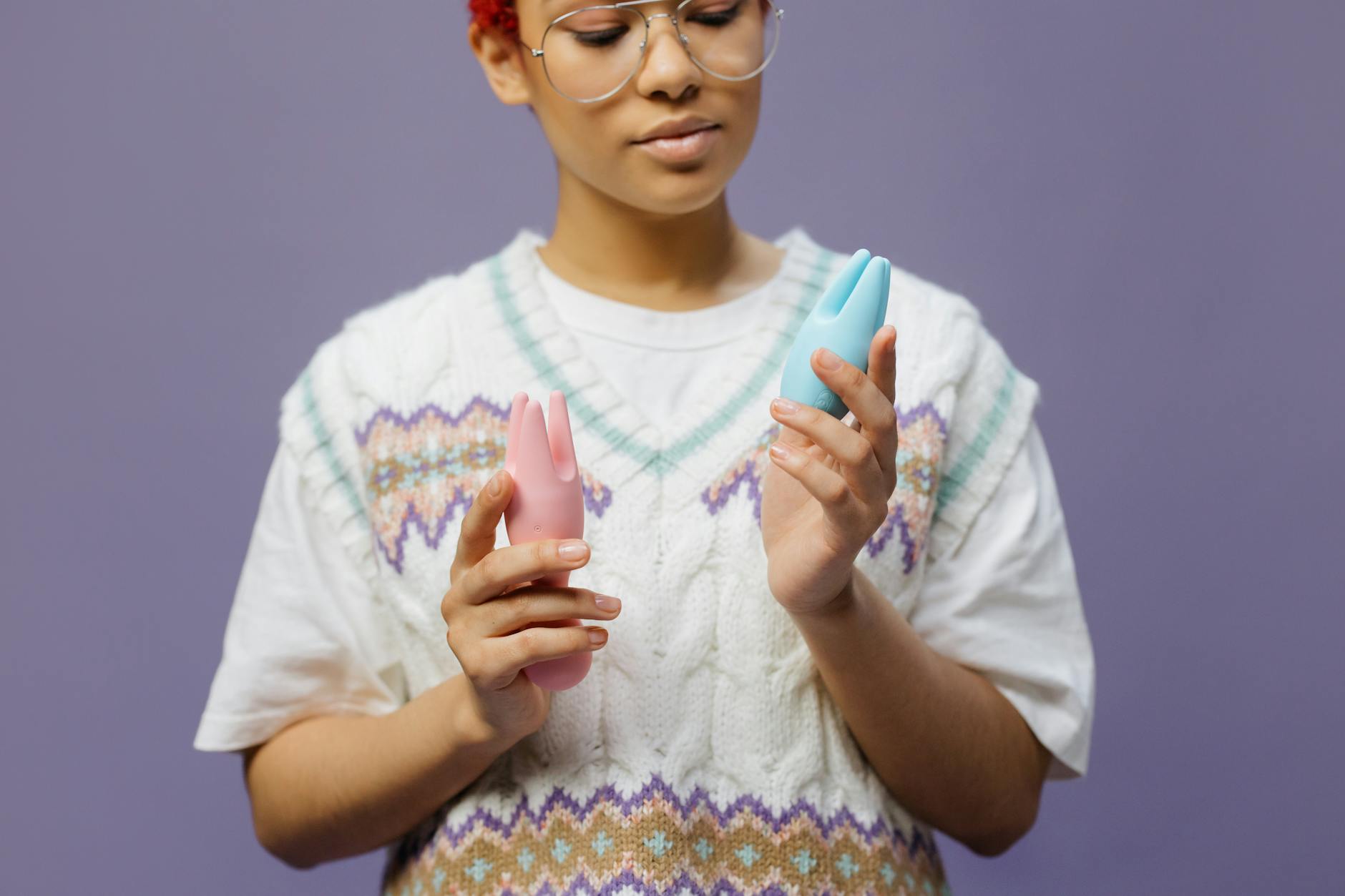
Photo by cottonbro studio on Pexels
That's not just comfort. That's important for medication compliance. People who feel they've completely lost sexual function are more likely to skip doses or abandon the medication entirely. Having a tool that keeps pleasure accessible, even in reduced form, keeps you in the medication long enough for adjustment to happen naturally.
Solo use versus partnered use
During the first few weeks of medication adjustment, solo sessions with an air-suction vibrator are genuinely easier than partnered sex. Less pressure. No performance expectations. You can spend twenty minutes exploring at low settings without anyone waiting for you to finish.
With a partner, introduce the lemon vibrator as a pleasure tool, not a workaround. "I want to try this with you. I think it'll feel amazing for both of us." Framing matters. This isn't "my medication broke me and I need a toy now." This is "let's explore something new together."
Many couples find that air-suction vibrators actually improve partnered sex during medication adjustment because they take the pressure off penis-in-vagina penetration to deliver all sensation. You can have oral sex, penetration, and clitoral suction happening at different times or simultaneously. More options. More pleasure. Less performance anxiety.
What to expect at the four-week mark
Most people report genuine improvement by week four. Arousal time drops. Orgasms feel more like orgasms. The frequency of successful sessions climbs. You're not fully back to baseline yet, but you're trending in the right direction.
If you're not seeing improvement by four weeks, that's when to loop in your prescriber. It might be that your body needs more time. It might be that this particular medication isn't the right fit for you. Both conversations are worth having.
What matters: you don't have to white-knuckle through six months of sexual dysfunction waiting for your body to adjust. Air-suction technology, combined with patience and communication, makes the adjustment window much shorter and much less distressing.
FAQ
Can I use a lemon vibrator immediately after starting antidepressants?
Yes. There's no medical reason to wait. Start at the lowest setting and work your way up over the first two to three weeks. You're relearning your baseline, not chasing intensity.
Will using a lemon clitoral vibrator make it harder for my body to respond to a partner?
No. Air-suction vibrators work on a different neurological pathway than partnered stimulation. Using one doesn't "train" your body to only respond to that specific input. Many people find they become more responsive overall during medication adjustment because they're actively rebuilding sensation.
What if I'm on multiple psychiatric medications?
The same principle applies. Different combinations can have different sexual side effects, but air-suction technology generally works better than traditional vibration for all medication-induced blunting. Talk to your prescriber about the specific medications you're on, but also don't wait for perfect timing. Start exploring now.
How long before I feel normal again?
Typically four to eight weeks. Some people adjust faster. Some take longer. The lemon sucker approach accelerates the process because it gives your nervous system permission to re-engage with pleasure earlier in the timeline, rather than waiting passively for medication to settle.
Should I tell my doctor I'm using a vibrator?
If the question comes up about sexual function, yes. But you don't need to volunteer it. Your doctor cares whether your sexual response is returning, not which specific tools you're using to make that happen. If your prescriber is the kind of person who gets weird about sex toys, that's information about your relationship with that provider, not about whether the vibrator is appropriate.
Can antidepressants permanently damage sexual function?
No. Once you stop the medication or adjust the dose, sexual function returns to baseline. The changes are neurochemical, not structural. Your body hasn't forgotten how to have pleasure. It's just temporarily running on a different setting.
The bottom line
Antidepressants are worth the sexual adjustment window. Your mental health comes first. And you don't have to suffer through that window with no tools. Air-suction lemon vibrators work faster and more effectively than traditional vibrators for medication-blunted sensation. Use them solo first, introduce them to partnered sex when it feels right, and give your body four to eight weeks to recalibrate.
Your pleasure is still in there. It's just on a different timeline while your nervous system adjusts. The right tools, like a lemon clitoral vibrator, make that timeline shorter and significantly less frustrating.
If you have questions about your specific medication or sexual side effects, reach out to your prescriber. If you want to talk through the pleasure side of this transition more, we're here. Contact Hello Nancy anytime.
Sources and Further Reading
Sotomayor-Castillo, C., & Li, W. W. (2020). Antidepressant-induced sexual dysfunction: A narrative review. Australian & New Zealand Journal of Psychiatry, 54(12), 1155-1165.
Haynes, K., Brown, J. S., & Musgrave, R. T. (2003). Medication and sexual function. Journal of Clinical Psychiatry, 64(7), 12-18.
Modell, J. G., Katholi, C. R., Modell, J. D., & DePalma, R. L. (1997). Comparative sexual side effects of bupropion, fluoxetine, paroxetine, and sertraline. Journal of Clinical Psychiatry, 58(2), 53-58.