Let's name what's actually happening
Anxiety before trying something new isn't weakness or prudishness. It's a nervous system that's trying to protect you by flagging the unfamiliar. That's hardwired. And here's the thing: that same nervous system is also capable of learning that new things can feel genuinely good.
The problem isn't the anxiety. It's trying to bulldoze through it or pretend it doesn't exist. Both strategies backfire. What actually works is treating anxiety like a conversation partner instead of an enemy. That's what I want to walk you through today.
Understanding why anxiety shows up around pleasure
Your brain has been trained by a lifetime of messages about what women should want, what's normal, what's "too much." Those messages don't live in your conscious mind. They live in your nervous system. So when you think about trying a lemon vibrator or any new intimate tool, your body might register threat before your brain even finishes the thought.
That's not broken. That's predictable.
Anxiety around sexuality often sits at the intersection of three things: unfamiliarity, safety questions, and performance pressure. Lemon vibrators trigger all three at once. A new object. Your own pleasure. The question of whether you're "doing it right." Your nervous system goes into high alert.
The people I work with who move through this most easily are the ones who stop fighting the anxiety and start treating it as information. Anxiety isn't telling you "don't do this." It's telling you "you need more safety, more time, or more clarity before you do this."
Building a safety framework before you even touch it
Start here: create conditions that make your nervous system feel safe. This is not indulgent. This is foundational.
Pick a time when you're already relaxed. Not Friday night when you're performing wellness after a full week, not Sunday morning when your family is two rooms away. Pick a time when you've already done something restorative. After a bath. After a walk. When you're alone and genuinely undisturbed.
Create a physical space that feels like yours. Close the door, silence your phone, light a candle if that matters to you. Anxiety hates uncertainty, so remove as many variables as you can. The more you control the environment, the less your nervous system has to defend against.
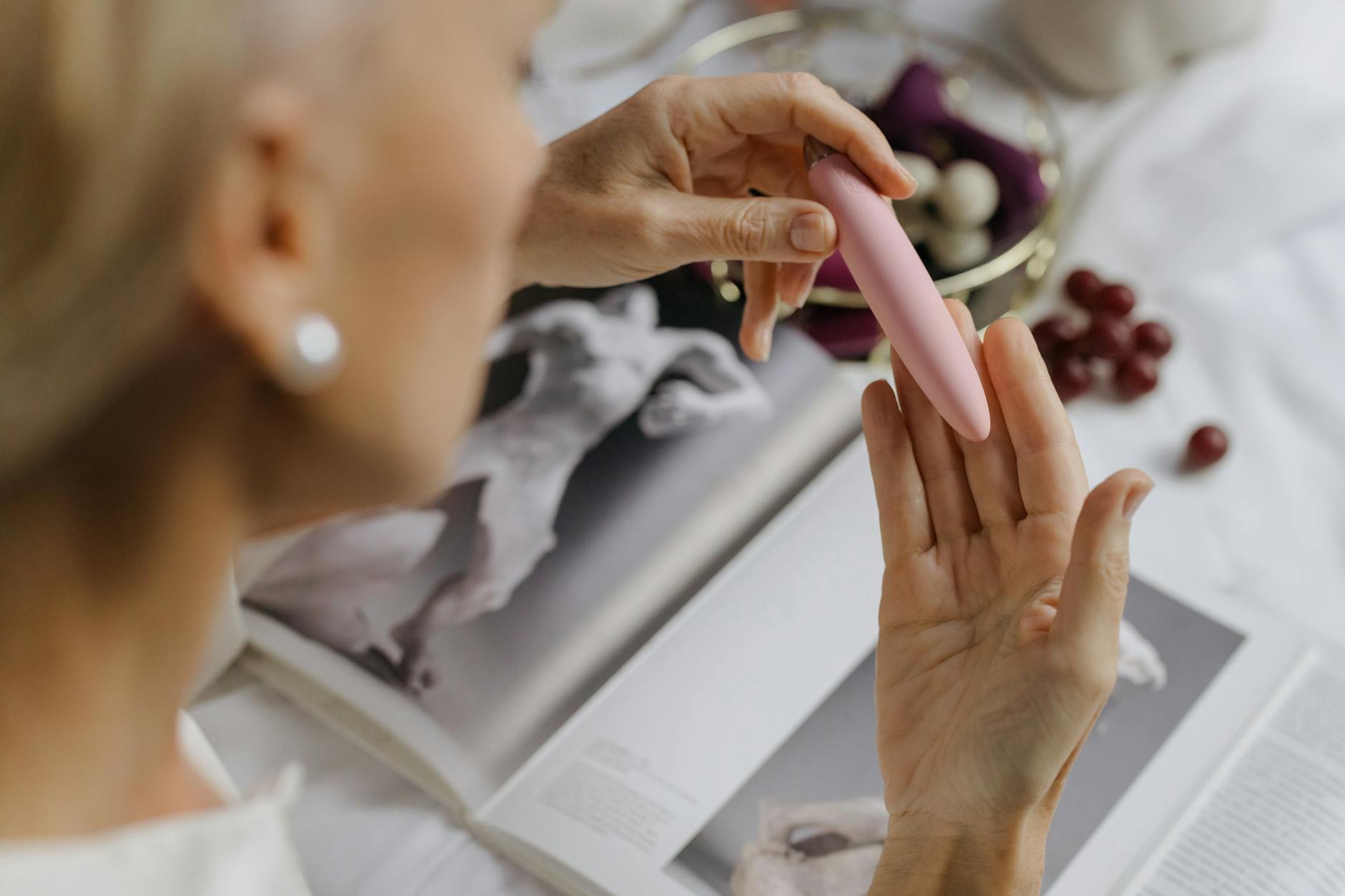
Then sit with the object itself. Don't use it yet. Just hold it. Notice its weight, its texture, the way it feels in your hand. This sounds small, but you're teaching your nervous system that this object is neutral, not scary. You're building familiarity through non-sexual contact first.
Moving from curiosity to sensation at your own pace
Here's where most anxiety strategies fail: they skip the middle. They go from "I'm nervous" straight to "use it during sex" without spending any time in the space between.
Instead, move in stages. First stage: touch yourself exactly as you normally would. No lemon vibrator. Just hands. Notice what your body actually responds to. Where you touch, how much pressure, what rhythm. This is not about achieving anything. It's about baseline data.
Second stage: have the lemon vibrator nearby while you explore yourself. Don't use it. Just know it's there. Some people find this step boring. That's fine. Boredom means your nervous system is starting to accept it as background noise, not threat.
Third stage: apply the vibrator to your outer thigh or your inner arm first. Not to your clitoris. Somewhere that has nerve endings but lower stakes. Feel the sensation without any pressure to respond. Notice that it doesn't hurt, it doesn't do anything unexpected, it's just a different kind of stimulus.
Fourth stage: apply it to your labia or the area around your clitoris. Not directly on the clitoral head if you're sensitive. Just in the neighborhood. Thirty seconds. That's it. Then stop.
This isn't about discipline. It's about teaching your nervous system in small, successful increments that this thing is safe, that you're in control, and that you can stop whenever you want.
What to do when anxiety spikes during use
It will, sometimes. That's normal.
First move: stop immediately. No shame, no "I'm supposed to push through." Stopping is the skill. Every time you honor an impulse to pause, you're proving to your nervous system that you're in control.
Second move: name what you're noticing. Not "I'm anxious." Be specific. "My chest feels tight." "I'm thinking about my partner hearing me." "I'm worried I'm doing this wrong." Naming specific sensations or thoughts interrupts the anxiety spiral.
Third move: return to the framework. Your breath, the room, your body right now. This is called grounding, and it's not woo. It's neuroscience. You're reminding your nervous system of the actual conditions you're in, which are safe.
Then wait. Don't push back into it immediately. Breathe. Maybe move on to something else entirely. Tomorrow or next week, you try again. Each attempt builds on the previous one. You're not failing if you pause. You're learning.
The role of communication if you have a partner
If you're in a relationship and your partner is involved or aware, tell them what's happening. Not "I'm anxious," but "I'm learning to use this at my own pace. I might want to explore alone first. That doesn't mean anything about wanting you. It means I need time to get comfortable."
Most partners respect that when it's clear. What triggers anxiety is ambiguity. If they don't know what you're doing or why you're doing it alone, they fill in the blank with their own stories. Direct communication shuts that down.
If you're exploring solo and that's your preference, you don't owe explanation. But if your partner is going to be part of this eventually, letting them in on the process (not the performance) reduces everyone's anxiety.
Why lemon vibrators can actually be easier for anxious people
There's something about air-suction technology that lands differently for people with anxiety around new sensations. It's gentler than traditional vibration. It doesn't buzz, which some people find overstimulating. You control the intensity dial step by step. You can start at level one and stay there for as long as you need.
You also have a direct, immediate feedback loop. You know exactly what the lemon vibrator is doing because you can see and feel it. There's no mystery. For an anxious nervous system, mystery is the enemy. Clarity is the ally.
When anxiety signals something else
Sometimes anxiety isn't just about newness. Sometimes it's pointing to something deeper. If you have a history of trauma around sexuality or your body, anxiety might be protective in a different way. If you're in a relationship where you don't feel safe or trusted, anxiety makes sense.
In those cases, a clitoral vibrator isn't the solution. The solution is working with a therapist who understands trauma and sexuality, or addressing the relationship dynamics that are making you feel unsafe.
That's not a problem with you or with the tool. That's a sign you need support in a different area first.
The goal isn't to eliminate anxiety
It's to build a relationship with it. To know that you can feel nervous and still move forward. To understand that your body's caution isn't the enemy. It's information.
Every time you sit with discomfort and move through it at your own pace, you're training your nervous system. You're proving to yourself that you can try new things. That you're capable of learning what you want. That your pleasure matters enough to take the time it takes.
That's the real work. And it's available to you whether you ever use a lemon vibrator or not.
People also ask
Why does my body tense up when I try to use a new vibrator?
Tension is your nervous system's defense response to unfamiliar sensation. Your muscles contract to brace against perceived threat, even when there's no actual danger. This is completely normal and reversible. The solution is slower progression and more nervous-system safety work beforehand. Breathe deeply before and during use, start with external placement only, and keep sessions brief until your body learns the sensation is neutral. Progressive exposure, not pushing through, rewires the response.
How long does it take to feel comfortable with a lemon vibrator if you're anxious?
There's no standard timeline. Some people feel comfortable in a week of gradual exposure. Others need a month or more. The speed depends on your history, your current stress level, and how safe you feel in your environment. The goal isn't speed. The goal is consistency. A few minutes twice a week will build comfort faster than sporadic attempts. Your nervous system learns through repetition, not intensity.
Can I use a lemon vibrator if I have sexual anxiety?
Yes, but with intention. Sexual anxiety usually shows up as tension, intrusive thoughts, or the feeling that something bad will happen. The approach is the same: build safety through gradual exposure, practice grounding techniques, and move slowly. Many people find that the control and gentleness of a lemon vibrator actually reduces sexual anxiety over time because you're proving to yourself that pleasure can happen on your terms, at your pace.
What's the difference between healthy nervousness and a sign I shouldn't do this?
Healthy nervousness feels like anticipation mixed with unfamiliarity. It might make your heart beat faster, but it's not accompanied by a sense of danger or dread. A sign you shouldn't do this (or shouldn't do it now) is when you feel genuine fear, deep dread, or when the thought triggers memories of trauma. Nervousness says "I'm trying something new." Trauma response says "my body is in danger." Those are different things and need different approaches.
Can anxiety actually stop me from experiencing pleasure?
Temporarily, yes. When your nervous system is in high alert, your body doesn't flood with the neurochemicals that create pleasure. Your clitoris may not become engorged. Lubrication may not flow. Orgasm might feel impossible. But this isn't permanent. It's a state, not a trait. As you build safety and your nervous system learns the situation is genuinely safe, those physical responses return. The anxiety itself isn't the problem. The problem is trying to force pleasure while your nervous system is still defending.
Should I tell my doctor if I have anxiety about using a vibrator?
If the anxiety is severe, persistent, or rooted in trauma, yes. A therapist or doctor who specializes in sexual health can help you sort whether this is normal newness anxiety or something that needs professional support. There's no shame in that conversation. Doctors talk about sexual pleasure and sexual health all the time. You deserve support in understanding your own body.
Start where you are
Anxiety isn't permission to stay stuck. It's not a stop sign. It's an invitation to move slower, build more safety, and get more intentional about your own pleasure. That's not weakness. That's wisdom. Your nervous system is trying to help you. The job is learning to work with it instead of against it.