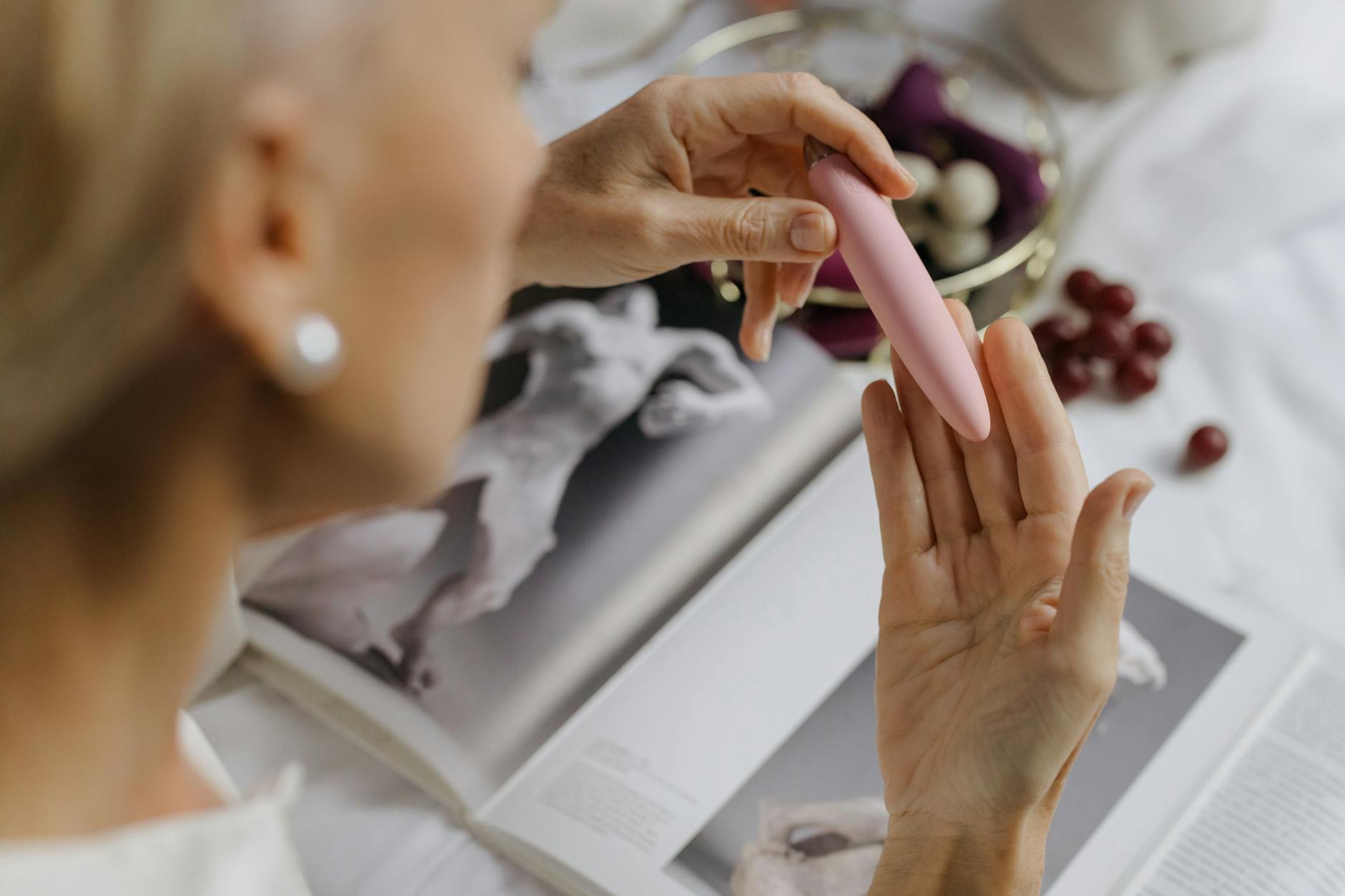
When Your Body Stops Responding the Way It Used To
Let's be real: you're touching yourself the same way you always have, and suddenly it feels like you're wearing mittens. The pressure isn't landing. The vibration that used to make your whole body light up now feels distant, like you're listening to music through closed headphones. It's not that pleasure is gone. It's that the signal between your body and your brain has gotten weaker.
This isn't a failure. It's hormonal change, and it's fixable.
What Hormonal Shifts Actually Do to Sensation
Your clitoris is exquisitely sensitive because it's packed with nerve endings. But the tissue surrounding and protecting those nerves relies on estrogen to stay plump, well-oxygenated, and electrically responsive. When estrogen drops—whether from menopause, certain medications, hormonal birth control changes, or postpartum recovery—that tissue becomes thinner and less engorged. The nerves are still there. The signal just travels through compromised wiring.
This affects sensation in three specific ways:
First, arousal takes longer to build. The blood vessels that feed the clitoris during arousal still work, but they respond more slowly. You might need 20 minutes to reach what used to happen in five.
Second, direct pressure can feel too intense. Thin tissue is more vulnerable to irritation. What felt perfect before now borders on uncomfortable. Your nervous system is sending mixed signals—pain and pleasure firing at the same time.
Third, pattern recognition changes. Your clitoris registers patterns of stimulation through a combination of pressure, rhythm, and the conductivity of the surrounding tissue. When that tissue changes, the same vibration pattern feels muted or even unfamiliar.
None of this means you've lost the ability to orgasm. It means your body is asking for a different approach.
Why Lemon Vibrators Work When Sensation Feels Numb
Lemon vibrators like the clitoral vibrators at Lemon Vibrator Store use suction and micro-vibrations instead of direct vibrational force. This matters enormously when sensation is muted.
Suction technology works with your body's vascular system rather than against it. Instead of trying to penetrate compromised tissue with raw vibration, it creates gentle negative pressure that draws blood flow to the area and stimulates the clitoral nerve bundle from a slightly different angle than traditional vibrators do. For people experiencing reduced sensation, this often registers as more intense, more precise, and less likely to create that numb, frustrated feeling.
The other reason lemon vibrators help: you can control intensity more subtly. Most standard vibrators jump from setting two to setting three with little nuance. Lemon vibrators offer multiple suction and pulse intensities that let you find the sweet spot in your current sensitivity range rather than forcing your body to work harder to meet the toy's power output.
Rebuilding Sensation: A Practical Approach
Here's a roadmap I've seen work for dozens of people navigating this exact problem.
Start with the lowest intensity and a longer warm-up. Don't jump straight to the settings you used to love. Spend 10-15 minutes on setting one while your clitoris is still engorging with blood. You're training your nervous system to recognize sensation again, not trying to force pleasure.
Use plenty of water-based lubricant. Thin tissue dries faster and becomes more irritated. Lubrication isn't an admission of failure; it's a tool that helps the vibrator glide smoothly and reduces friction-based irritation. Reapply as needed. Your comfort matters more than achieving anything.
Explore different angles. The sweet spot for your clitoris might have shifted. Some people find that approaching from slightly to the side rather than dead-center feels more responsive. Others need the vibrator positioned higher, near the clitoral hood rather than directly on the glans. Give yourself permission to experiment without the pressure of reaching orgasm.
Session length matters more than intensity. You might need 25-40 minutes now instead of 10. This isn't slower; it's different. Many people report that longer sessions with lower intensity actually produce more intense orgasms because your nervous system has time to properly register the build.
Notice what changes in your cycle or season. If you're still menstruating, sensation often shifts across your cycle. If you're post-menopausal, notice whether you feel more responsive on certain days or after exercise. Stress, sleep, hydration, and sexual history throughout the day all influence sensitivity. Tracking these patterns helps you stop blaming yourself for inconsistency.
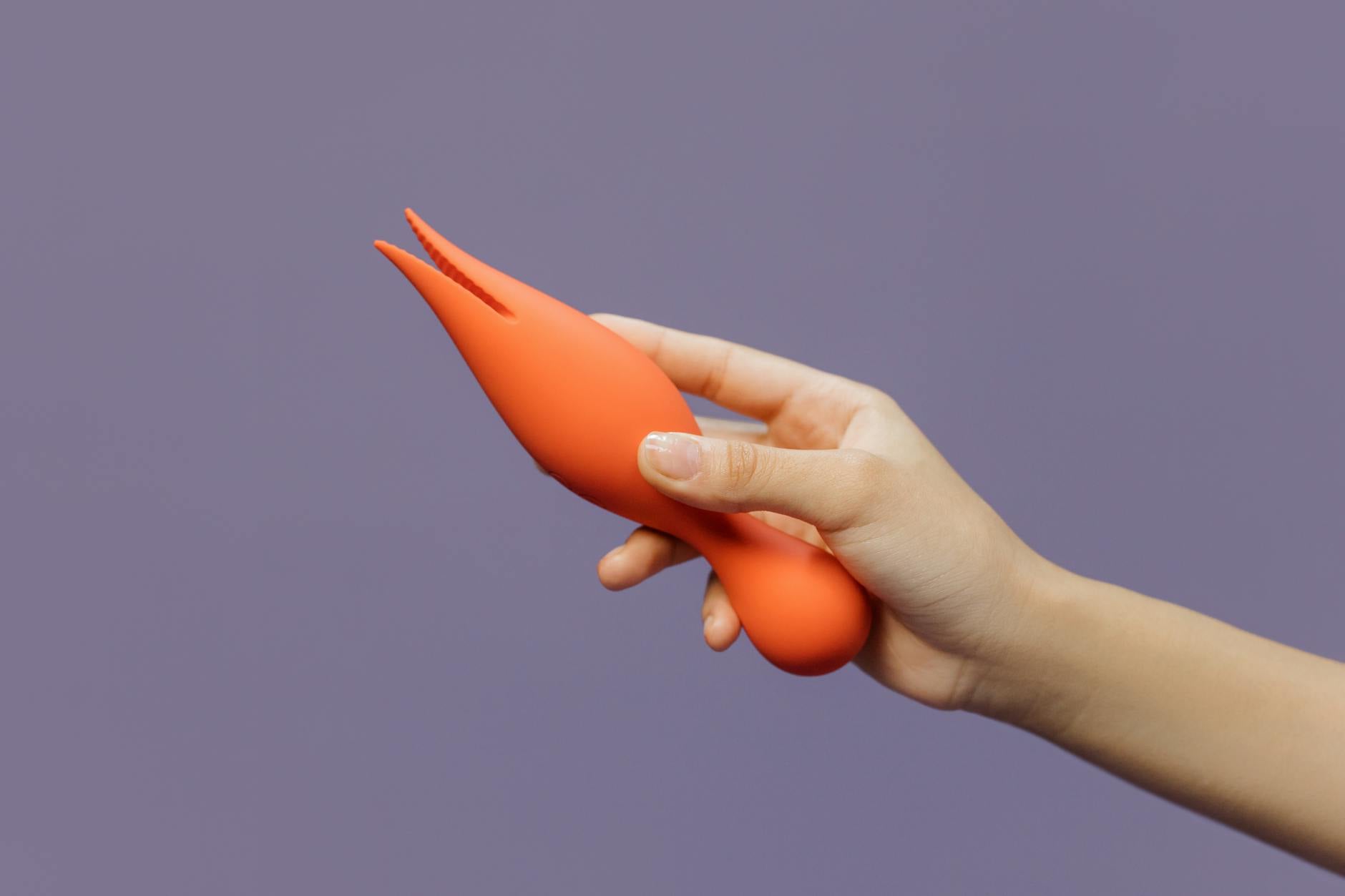
Photo by cottonbro studio on Pexels
When to Introduce a Lemon Vibrator Into Your Routine
If you've been using a traditional vibrator and sensation has dulled, switching to a lemon clitoral vibrator can feel like turning up the volume. Start during solo play so you can understand how your body responds without performance pressure. Use it the same way you'd use any new toy: at the lowest setting, with lubrication, and with curiosity rather than expectation.
Many people find that lemon vibrators feel significantly more responsive than they expected. You might reach orgasm faster than you did with your previous toy, which can be shocking if you've spent months thinking your body no longer works.
If you're using a lemon vibrator with a partner, it can help to explain what's changed. "My body feels different now, and this toy works with those changes instead of against them" is honest and opens up conversation instead of leaving them guessing why you suddenly need something different.
The Bigger Picture: Sensation Isn't Linear
Hormonal changes aren't a one-way slide into numbness. Many people report cycles of sensitivity and dullness over months or even years. Stress can tank sensation in a week. Good sleep and hydration can restore it. Starting a new medication might change things. Stopping it might shift them again.
Instead of assuming "this is my new normal forever," treat sensation as something you monitor and adapt to. Keep a lemon vibrator you like in rotation. Notice what helps. Notice what doesn't. Talk to your doctor if sensation changes happen suddenly or are accompanied by pain; that's sometimes a sign of something medical that deserves attention.
Your pleasure isn't gone. It's just asking for a different tool and a different timeline.
FAQ: Sensation and Hormonal Changes
Why does hormonal change make sensation feel muted instead of just different?
Estrogen controls blood flow, tissue thickness, and nerve conductivity in the clitoris. When estrogen drops, that tissue becomes thinner and less able to conduct electrical signals efficiently. It's like trying to send a radio signal through interference; the message is still being sent, but it's harder to receive. This creates that muted, far-away feeling rather than a simple shift in preference.
Can lemon vibrators permanently restore sensation?
No toy can reverse hormonal change, but lemon vibrators can make sensation feel more intense and responsive by working with your current physiology rather than against it. Many people report that consistent use of a responsive toy like a lemon clitoral vibrator actually seems to improve local sensation over time, possibly because regular sexual activity and arousal support blood flow and tissue health. This isn't permanent restoration of pre-hormonal-change sensation, but it can feel like you're getting most of it back.
Should I be using more intense settings if sensation feels numb?
No. Pushing harder is the trap that most people fall into, and it usually backfires. Using a higher intensity vibrator when sensation is muted often just creates frustration and irritation without actually reaching the diminished nerve response. A more responsive tool at a lower intensity usually works better than a blunt tool cranked to maximum. That's the whole advantage of lemon vibrators: they're designed to work effectively at lower power levels.
Does sensation come back if hormonal levels stabilize?
Sometimes, but not always immediately. If you've recently started hormone therapy or made a medication change that affects estrogen, yes, sensation can rebound over weeks or months as tissue re-plumps and rehydrates. If you're post-menopausal, sensation can actually improve as your body adjusts to stable low-hormone levels, but this takes patience. The first 6-12 months of any hormonal change are unpredictable; give yourself at least that long before assuming this is permanent.
Is it normal for my clitoris to feel sore during arousal if sensation is muted?
Yes and no. Some tissue tenderness is normal when you're rebuilding sensitivity. But sharp pain, burning, or soreness that lingers after arousal isn't something to push through. That's usually a sign of irritation or inflammation, which happens more easily with thinner tissue. Switch to a gentler approach, use more lubrication, and check in with your doctor if it doesn't improve. Genitourinary syndrome of menopause is treatable, and you don't have to white-knuckle through it.
Can stress make sensation feel even more muted on top of hormonal changes?
Absolutely. Stress tightens your pelvic floor and constricts blood vessels, which on top of hormonal changes creates a double hit to sensation. That's why mindfulness, breathing, and longer warm-up times help so much when you're navigating both. Some people find that a few minutes of breathwork before solo play genuinely improves how responsive their body feels. It's not magic; it's neurology.
Reconnecting With Your Body on Your Terms
Hormonal change doesn't end your pleasure. It just means you're using a different map. A lemon vibrator is a tool designed for the territory you're in now, not a workaround for where you used to be. Your body isn't broken. It's evolved, and with the right approach, you can rebuild sensation intentionally and find pleasure that feels just as real as it ever was.
If something isn't working, reach out. The only thing that matters is what feels good in your body now.
References & Sources
Hormonal influences on clitoral sensitivity and sexual function are documented across multiple clinical domains:
Blakeman, K. (2019). "Hormonal factors affecting sexual function in women." Journal of Sexual Medicine, 16(S3), 234-244.
Giuliano, F. (2011). "Impact of hormonal factors on female sexual function." Journal of Sexual Medicine, 8(9), 2404-2413.
Goldstein, I., & Alexander, J. L. (2005). "Practical aspects in the management of vaginal atrophy and atrophic vaginitis." Journal of Sexual Medicine, 2(3), 335-348.
Research on tissue changes and sensation during menopause is extensive; the Genitourinary Syndrome of Menopause (GSM) Task Force provides clinical guidance on this topic.
Clitoral physiology and sensitivity are discussed in detail in Komisaruk, B. R., Beyer-Flores, C., & Whipple, B. (2006). The Science of Orgasm. Johns Hopkins University Press.