
When desire mismatch feels like incompatibility
Let's be real. The most painful part of mismatched libido isn't the lack of sex. It's the feeling that your partner doesn't want you. And if you're the person with lower desire, the guilt and pressure can make the whole thing worse. Enter the lemon vibrator. Not as a replacement for your partner, but as a tool that actually reframes the entire conversation.
Mismatched desire is one of the most common problems couples bring into therapy. A study in Archives of Sexual Behavior found that about 34% of women and 15% of men report low sexual desire at any given time. That gap matters. When one person's baseline is naturally lower, or when stress, medication, or hormonal shifts tank desire temporarily, a vibrator can become the thing that lets you stay connected without pressure.
Why pressure kills desire (even more)
This is the counterintuitive part. The more your partner pursues you when you're not interested, the less interested you become. Your nervous system reads the pursuit as a threat. You start avoiding intimate moments entirely because you know they'll escalate into "the conversation" about why you're not in the mood.
A lemon vibrator interrupts that dynamic. Instead of sex being a binary (yes or no), it becomes something you can do together that doesn't require your body to perform in a specific way. You can be present, curious, and not responsible for producing an erection, lubrication, or an orgasm on demand. That alone can lower the stakes enough to let desire return.
The conversation before the toy
Buying a vibrator and leaving it on the nightstand is not a conversation starter. It's a grenade. Here's what actually works:
Start when you're both calm and clothed. "I've been thinking about how we've drifted, and I don't think it's because we don't care about each other. I think the pressure around sex has made it harder for both of us. I found something that might help us reconnect without all that weight." That's it. You're naming the real problem (pressure, not desire itself) and offering a specific solution.
Let your partner respond. They might feel relieved. They might feel defensive. Both reactions are normal. If they're defensive, don't push. Wait a few days. Bring it up again with less emotion. "I'm not trying to fix you. I'm trying to find a way we both feel good."
How the lemon vibrator changes the dynamic
Unlike a traditional wand or vibrator that requires a lot of physical presence or coordination, a lemon vibrator uses air-suction technology that works brilliantly for pleasure-building when you're starting from a low baseline. The sensation is less intense than you might expect, which matters when you're anxious or disconnected.
Here's the practical part. You use it solo, while your partner is present but not performing. They might be kissing your neck, holding your hand, watching your face, talking to you. The point is they're involved without carrying the weight of "making it work." After a few sessions, desire often returns naturally because the nervous system has learned that intimacy doesn't equal high-stakes performance.
The three positions that actually work for couples
Solo with partner present. You're using the lemon vibrator on yourself while your partner is touching you elsewhere—your breasts, your inner thighs, your neck. They're getting to participate without the pressure of direct penetration or providing stimulation. This is the lowest-stakes entry point.
Partner-directed pleasure. Your partner holds the lemon vibrator while you guide them—faster, slower, different patterns. This puts them back in control in a way that doesn't require their own arousal to be there first. Many people with lower desire report that being the one directing pleasure actually rebuilds interest.
Foreplay extension. Use the lemon vibrator as part of regular foreplay, not as the main event. You spend 10-15 minutes with other types of stimulation, then introduce the vibrator for the last 5-10 minutes. This keeps the erotic arc intact without demanding penetrative sex.
When your partner has medication-related low desire
If your partner's low desire is tied to antidepressants, blood pressure meds, or other medications, the vibrator isn't a workaround. It's a bridge while they talk to their doctor about timing or alternatives. But it's an important bridge because it keeps you connected while that conversation is happening.
Using a lemon vibrator together also gives you both permission to enjoy pleasure that doesn't require traditional sexual response. That's not a consolation prize. That's often better.
What NOT to do (the common mistakes)
Don't spring the vibrator as a surprise during sex. Your partner will feel ambushed. Don't use it to prove anything or get them "in the mood." Don't compare it to porn or other partners' experiences. Don't shame them for not wanting sex. Don't make the vibrator a secret that only you enjoy—the point is togetherness, not a workaround that adds shame.
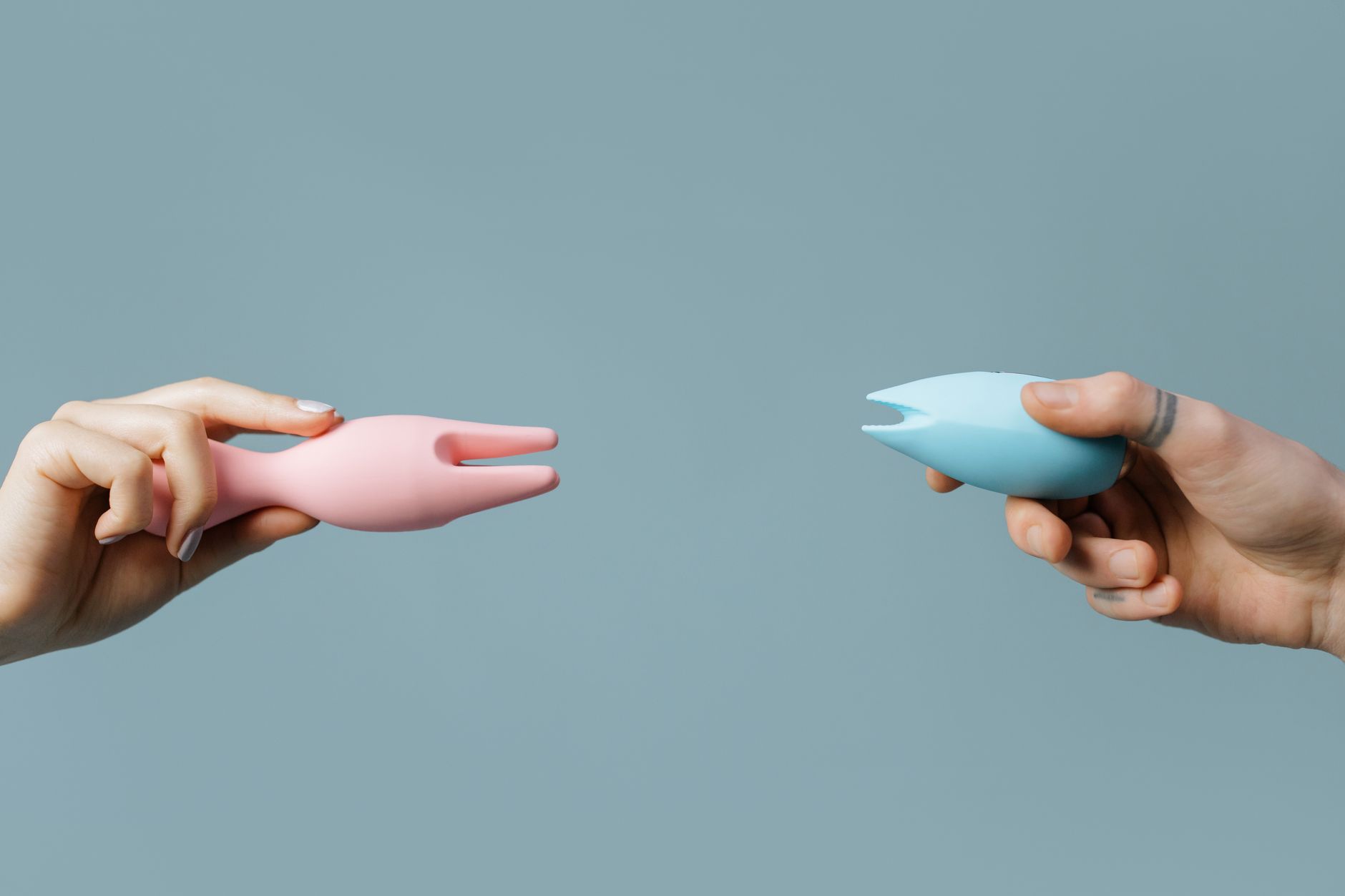
Photo by cottonbro studio on Pexels
When mismatched desire is actually about the relationship
Here's the hard part. Sometimes low desire isn't about hormones or meds. Sometimes it's about resentment, disconnection, or a partner who hasn't earned trust. A lemon vibrator can't fix that. What it can do is create a low-pressure space where you can talk about what's actually broken without sex being the battleground.
If your partner's low desire is rooted in relationship issues, therapy is the real tool. But a vibrator can create enough ease and pleasure that the work of repair feels less impossible.
How to rebuild desire when it's been dormant
Desire doesn't flip a switch. It rebuilds like muscle memory. Start by using the lemon vibrator solo while your partner is present. Then move to the partner-directed version. Then to foreplay extension. Each step should feel easy, not forced. The goal isn't frequent sex. The goal is removing the shame and pressure that made desire disappear in the first place.
Many couples report that within a few weeks of using a vibrator together without performance pressure, the person with lower desire naturally becomes interested in more frequent sex. That's because you've separated pleasure from obligation.
The conversation that happens after
After you've used a lemon vibrator a few times together, you'll notice something. The tension around sex starts to ease. That's when the real conversation can happen. "What would make you want me more?" "Is there something I'm missing about what turns you on?" "Do you feel pressured? I never want you to feel that way."
Those questions, asked after pleasure instead of during tension, are infinitely more productive. Your partner isn't defensive. They're not performing. They're just talking. And you're listening like someone who actually wants to understand them, not fix them.
When to know if this approach is working
Within three to four weeks, you should notice a shift in the energy around sex. Less tension. Less resentment. Maybe more interest from your partner, maybe not—but definitely less avoidance. If after a month nothing has changed and the conversation hasn't improved, that's a sign that this isn't about desire at all. It's about something deeper in the relationship that needs professional support.
That's not a failure. That's information. And it's actually valuable information because now you know a vibrator alone can't solve this, and you can focus on what actually will.
FAQ: Mismatched Libido and Using a Lemon Vibrator
Should I use a lemon vibrator if my partner refuses to be involved?
No—at least not in a couple's context. Using a vibrator secretly or against your partner's wishes will deepen the rift, not bridge it. The whole point is shared pleasure and reconnection. If your partner refuses to engage, the issue is deeper than desire mismatch. Consider couples therapy before adding any toy.
What if my partner is jealous of the vibrator?
Jealousy often masks insecurity about adequacy. Reframe it clearly: "This isn't about you not being enough. It's about reducing the pressure on both of us." If jealousy persists, explore where it's coming from. Is it about the toy, or is it about feeling disconnected in general? Couples therapy can untangle that.
Can a lemon vibrator actually increase desire or is it just a temporary fix?
It's both. In the short term, it removes performance pressure, which instantly improves the emotional climate around sex. Long-term, when pressure drops, desire often naturally returns because your nervous system feels safer. But a vibrator isn't therapy. If the root cause is unresolved conflict, you need to address that too.
How often should we use a lemon vibrator together if we have mismatched desire?
Start with once a week, no expectations. Not "we're having sex night," just a time set aside where pleasure is the goal, not performance. As desire returns, frequency usually increases naturally. The moment it feels obligatory, you've lost the whole benefit.
What if my partner uses a lemon vibrator on themselves but doesn't want partner involvement?
That's a sign they need more privacy or autonomy in pleasure. That's actually healthy. You can be supportive of their solo play without it needing to be a couple's activity. The connection rebuilds in other ways—through conversation, through curiosity about what they enjoy, through removing judgment.
Is it weird to use a vibrator with a long-term partner?
Not even slightly. Couples who use vibrators together report higher sexual satisfaction and lower conflict around desire mismatch. The "weirdness" is a story we inherit, not reality. Reality is that tools designed to feel good feel good, and sharing pleasure is one of the fastest ways to rebuild connection.
The real thing a lemon vibrator does for mismatched libido
It gives you permission to stop making sex the measure of your relationship. It creates a space where pleasure isn't about proving anything, proving you're desired, or proving you're compatible. It's just about feeling good together, without stakes, without performance, without the weight of years of "we need to talk about this."
That permission alone changes everything. Your partner might never have the same baseline desire as you. That's okay. But you can both feel satisfied, connected, and genuinely wanted. A lemon vibrator doesn't fix mismatched libido. It removes the shame and pressure that makes mismatched libido feel like a relationship death sentence. Everything else follows from there.